
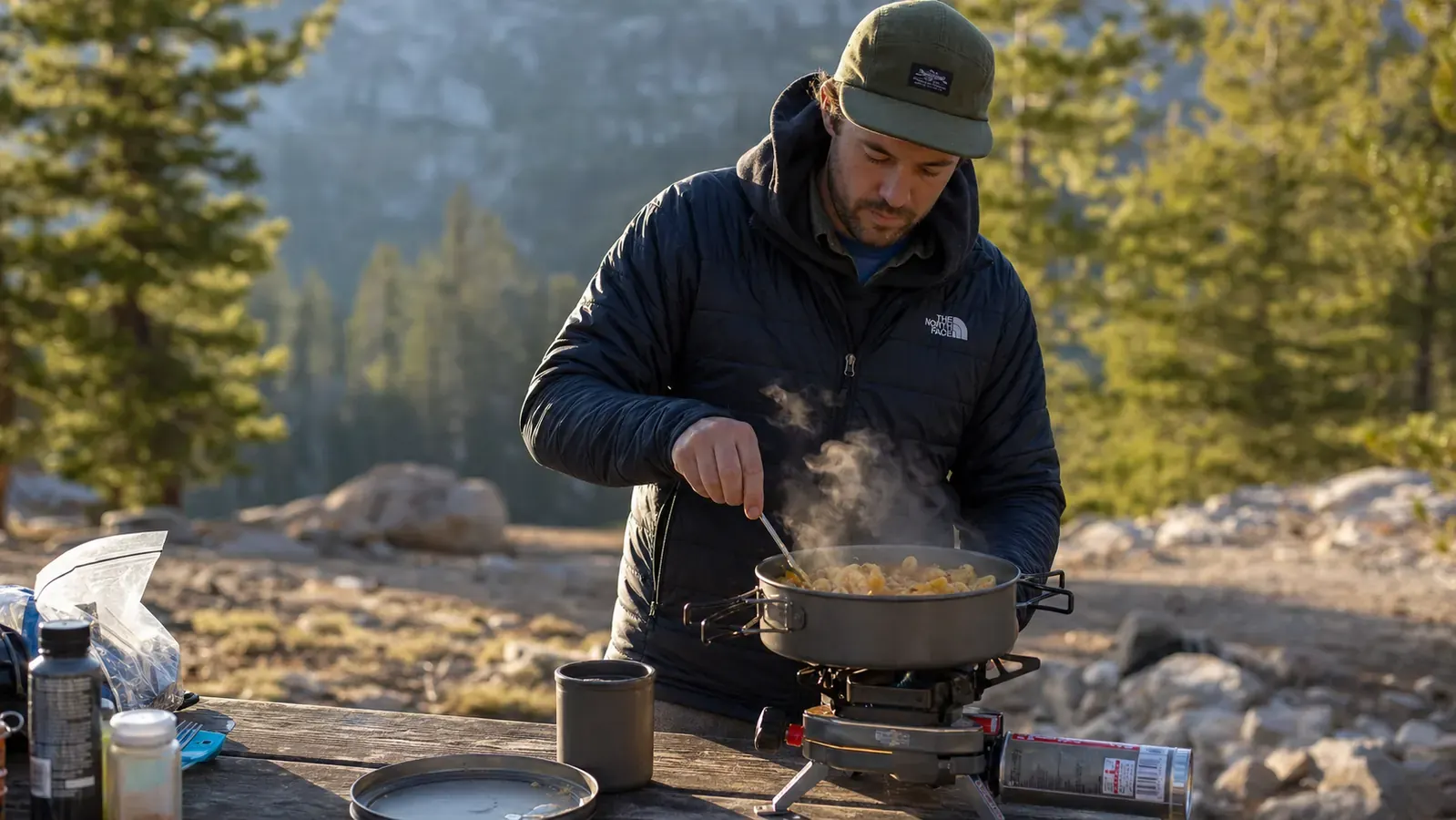
The biggest mistake I made in my first five years of camping had nothing to do with tent stakes or rain fly tension. It was camp food. I would show up at the site, starving from the drive, rummage through a paper grocery bag, and end up eating cold granola bars because the campfire took forty minutes to get going and I hadn't thought past that. Cold food at camp is a morale issue. You're tired, maybe a little wet, and a hot meal is one of the easiest ways to turn a rough arrival into a good night. Once I started cooking on a portable stove instead of relying on the fire, my entire camp experience changed.
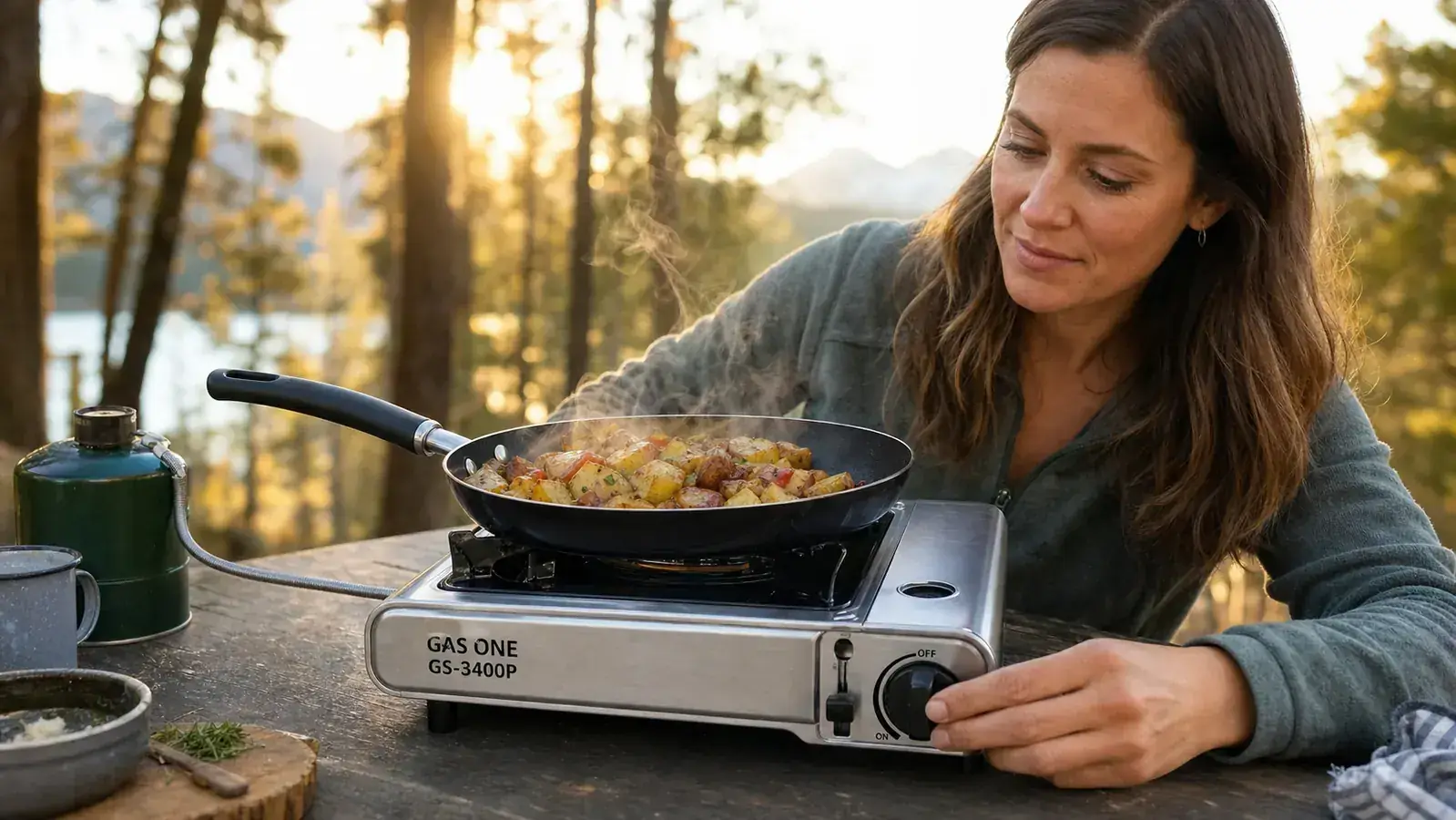
The Gas One GS-3400P is the stove I've been using for two seasons now, and it's the one I recommend to anyone who asks. It runs on propane canisters or butane canisters, whichever you can find at the gas station on the way out of town. It's compact enough to slip inside a day pack. It lights on the first try every time. But the stove is only part of the system. What actually gets you a hot dinner in under fifteen minutes is having a process. This guide walks through that process, step by step.
Skip the cold granola bar. The Gas One GS-3400P gets your camp kitchen running in under two minutes.
Dual-fuel design works with propane or butane. Compact enough for a daypack. Rated 4.6 stars by nearly 15,000 campers on Amazon.
Amazon Check Today's Price on Amazon →Why a Portable Stove Changes the Cooking Equation at Camp
Campfires are great for ambiance and for cooking if you have the time. But fire takes patience. You need dry wood, which isn't always available on a wet weekend in October. You need to wait for coals, not flames, if you want even heat. And you need to manage the fire while you cook, which isn't relaxing when you're also trying to set up camp, filter water, and wrangle kids. A portable stove gives you a controlled, repeatable heat source that you can dial up or down with one hand. That predictability is what lets you actually cook quickly.
The Gas One GS-3400P puts out 7,650 BTUs on butane or up to 10,000 BTUs on a small propane canister. That's enough to boil a quart of water in under eight minutes at sea level, and enough heat to sear and scramble without waiting. It's also stable enough on an uneven picnic table that I've never had a pot tip on me, which is something I can't say for every compact stove I've tested.
Step 1: Prep Your Ingredients at Home Before You Leave
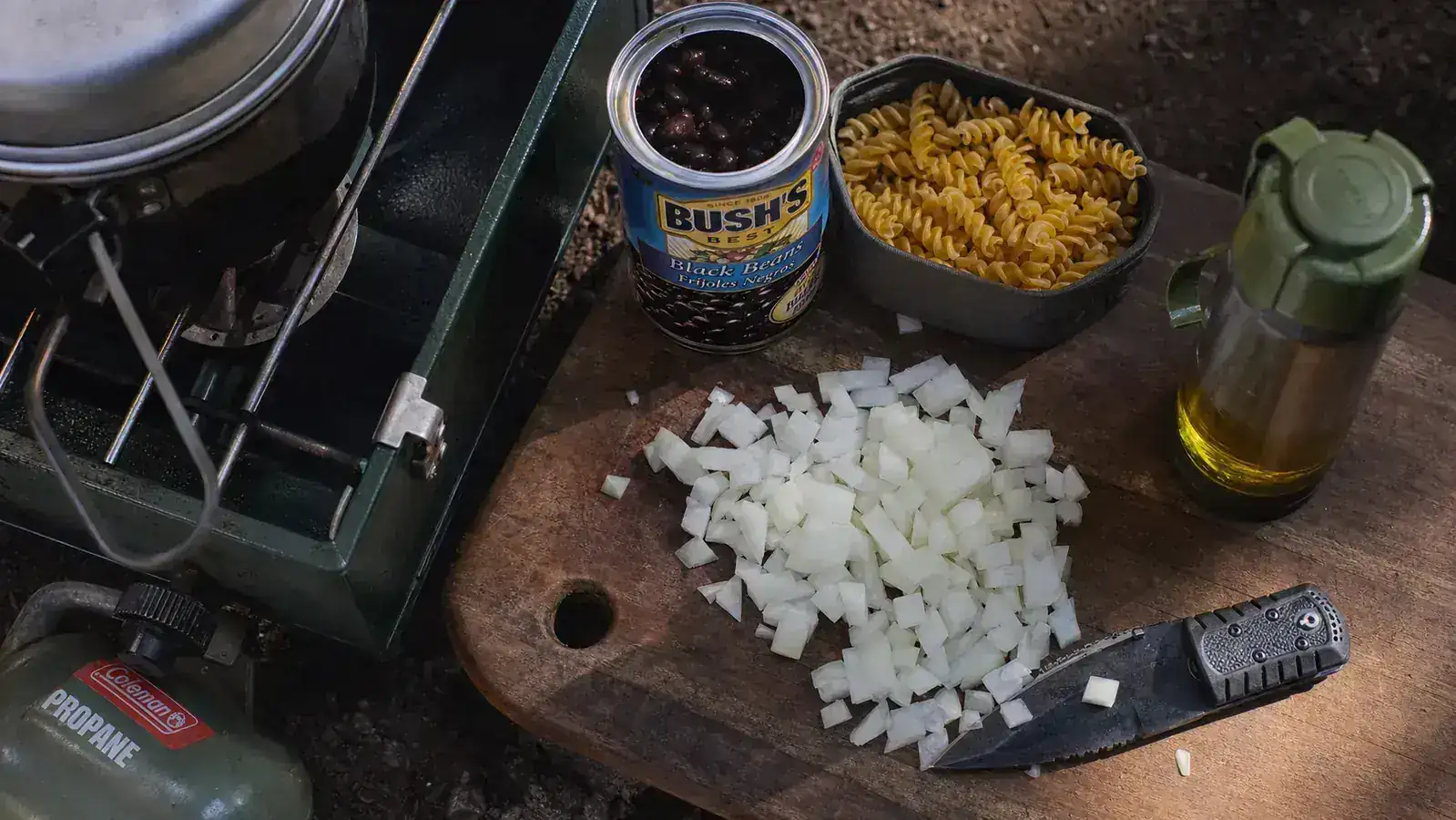
This is the step most campers skip, and it's the one that matters most. Camp cooking is slow when you're chopping an onion at a picnic table in the dark with a folding knife and no cutting board that stays flat. Prep at home. Dice the onions, peppers, garlic, and any other aromatics you need and seal them in a zip-lock bag. Measure out dry spices and combine them into a single small container labeled with what it goes with. Par-cook any protein that takes a long time, like sausage or chicken strips, and store it in a sealed bag in the cooler.
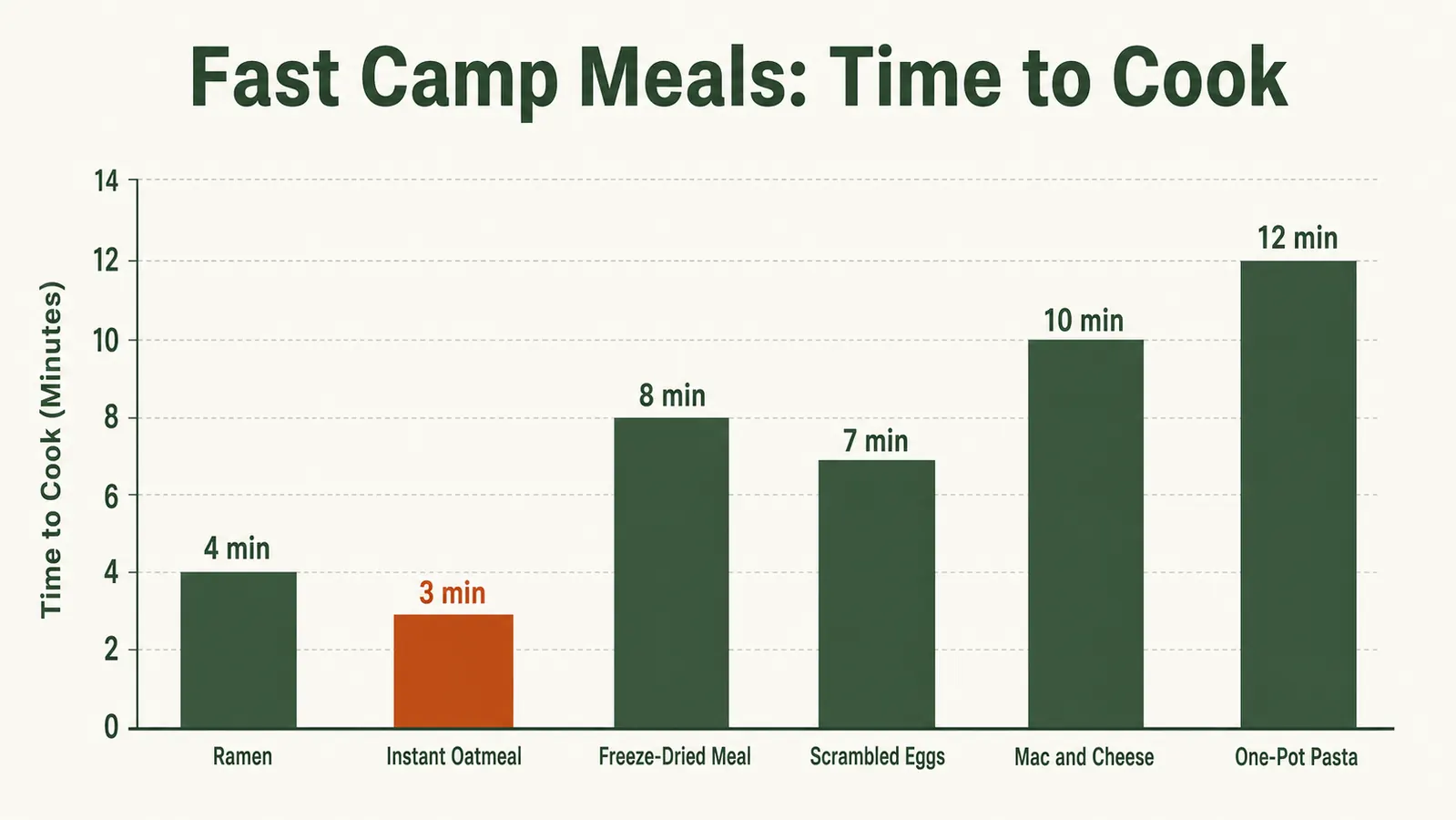
A meal that would take thirty minutes to cook from raw at camp can take eight minutes when the prep work is already done. I usually spend about fifteen minutes on a Sunday afternoon getting three full camp dinners ready to go. That covers a Friday night arrival, Saturday dinner, and Sunday breakfast without any real cooking at camp beyond heating a pan. The payoff at the site is enormous, especially if you're arriving late after a long drive.
Good meals to pre-prep: breakfast scrambles (eggs beaten and poured into a sealed container, veggies already diced), pasta with a jarred sauce that just needs to be warmed, and one-pan rice dishes where you just add pre-portioned ingredients to boiling water. Keep your camp meals simple. The goal is hot, satisfying food in under fifteen minutes, not a showcase of culinary skill.
Step 2: Set Up the Stove on a Stable, Wind-Sheltered Surface
The Gas One GS-3400P has folding support arms that lock into place with a satisfying click. Setting it up takes about thirty seconds. The key thing most people ignore is placement. Wind is the enemy of camp stove efficiency. Even a light breeze hitting the burner from the side can cut your effective BTU output in half, meaning water that should boil in eight minutes takes fifteen. Put the stove on a picnic table with your body or your cooler as a windbreak, or position it against a tree or rock if you're cooking on the ground.
For fuel, I carry one 8-ounce butane canister per day of cooking. The GS-3400P accepts the standard EN417 butane cartridge, which you can find at Asian grocery stores, camping retailers, and some gas stations. Butane is cheaper per BTU than propane and delivers slightly more consistent heat in moderate temps. That said, if you're camping in cold weather, below 40 degrees Fahrenheit, switch to propane. Butane loses pressure in the cold and can sputter. The GS-3400P handles both without any adapter.
Screw in your fuel canister, turn the knob to ignite, and press the piezo ignitor button. On the GS-3400P, the ignitor clicks once and catches every time I've used it. If it misses on a cold morning, a lighter does the job in one second. Let the stove run on low for about thirty seconds to warm the burner before cranking up the heat for boiling.
Step 3: Use the Right Cookware for Camp Stove Cooking
Camp stove burners are smaller than a home range burner, which means big pots and wide pans don't sit well and don't heat evenly. The sweet spot for a single-burner stove like the GS-3400P is a pot or pan in the seven-to-ten inch diameter range. I use an eight-inch stainless steel pan for scrambles and sautes, and a 1.5-liter pot for boiling water and making pasta or instant mashed potatoes. Both fit inside each other and nest inside my cook kit bag.
Avoid non-stick pans with a scratched coating at camp. They're not worth the weight if you can't trust the surface. A well-seasoned cast iron skillet is ideal if you're car-camping and don't mind the extra eight pounds, but it's overkill for backpacking. For most car-camping trips, a lightweight stainless or titanium pan is the better call. Whatever you use, make sure the handle folds or detaches, because a fixed-handle pan is awkward to pack and rattles around in your gear bag.
When the prep is done at home and the stove is out of the wind, fifteen minutes is genuinely enough time to cook a real meal at camp. Not survival food. Actual dinner.
Step 4: Build a Short Camp Recipe List and Stick to It
Decision fatigue is real at camp. You've been driving for three hours, you set up the tent, and now you're staring at a cooler trying to invent a meal from scratch. The fix is simple: pick three to five meals you like and know how to make quickly, and cycle through them every trip. Don't try new recipes at camp. Cook what you've made before at home and already know works.
My current rotation: morning scramble with pre-beaten eggs, pre-diced peppers and onions, and a handful of shredded cheese; lunch quesadillas from a cast iron on the GS-3400P with canned chicken and pre-shredded cheese; evening pasta with olive oil, garlic, sun-dried tomatoes, and parmesan from a shaker. All three of these cook in under ten minutes once the burner is lit and the ingredients are pre-prepped. The pasta takes the longest, about twelve minutes start to finish because water needs to boil.
For group trips, I do a one-pot chili using two cans of beans, one can of diced tomatoes, pre-cooked ground beef, and a spice packet I put together at home. The whole thing heats through in six minutes and serves four people. Pair it with flour tortillas warmed directly on the burner for about thirty seconds per side and nobody at the campsite goes to bed hungry.
Step 5: Clean Up Fast So You're Not Scrubbing at Midnight
Clean-up is where most campers lose time and morale. A pan with cooked-on egg is a ten-minute problem if you let it sit. It's a two-minute problem if you deal with it right after eating. The system I use: while the meal is being served, I pour about a cup of water into the hot pan and let it sit. By the time everyone has eaten, the water has loosened everything. A quick scrub with a silicone camp brush, a rinse, and the pan goes back in the cook bag. Total time: two to three minutes.
For the stove itself, let it cool completely before packing it. The GS-3400P's grate and drip tray come off for cleaning. I wipe them down with a dry rag after each use and do a proper wash at home after the trip. The stove body wipes clean with a damp cloth. At camp, the goal is clean enough to store safely, not spotless. That's a job for the kitchen sink.
One rule I enforce on group trips: the cook doesn't clean up. Whoever cooked gets to sit down and eat while someone else handles the pan and pot. It distributes the work fairly and makes the cook more likely to volunteer next time. If you're solo camping, get in the habit of pre-soaking the pan before you eat so the food has time to release while you enjoy the meal.
What Else Helps Speed Up Camp Cooking
A few smaller things make a real difference over the course of a trip. Keep a water jug or collapsible container filled and close to the stove so you're not walking to the spigot every time you need water for cooking. Use a pot lid when boiling water. It sounds basic, but I've watched people wait twice as long for water to boil because they left the lid off. A lid traps heat and cuts boil time by a third on a camp stove.
Carry a small butane canister for each day of cooking plus one spare. Running out of fuel on day two of a three-day trip is a miserable experience that is completely preventable. The GS-3400P's tank-style burner is very fuel-efficient, but I still carry a backup. For a three-day trip with two people cooking three meals a day, two 8-ounce canisters is usually enough. I always have a third just in case.
Finally, invest in a quality cooler with a good seal. The GS-3400P handles the cooking end fast, but if your pre-prepped ingredients have gotten warm in a cheap foam cooler, you've got a food safety problem and your ingredients won't cook the same way. A hard-sided cooler with good insulation keeps everything at temperature for the full trip without daily ice top-offs.
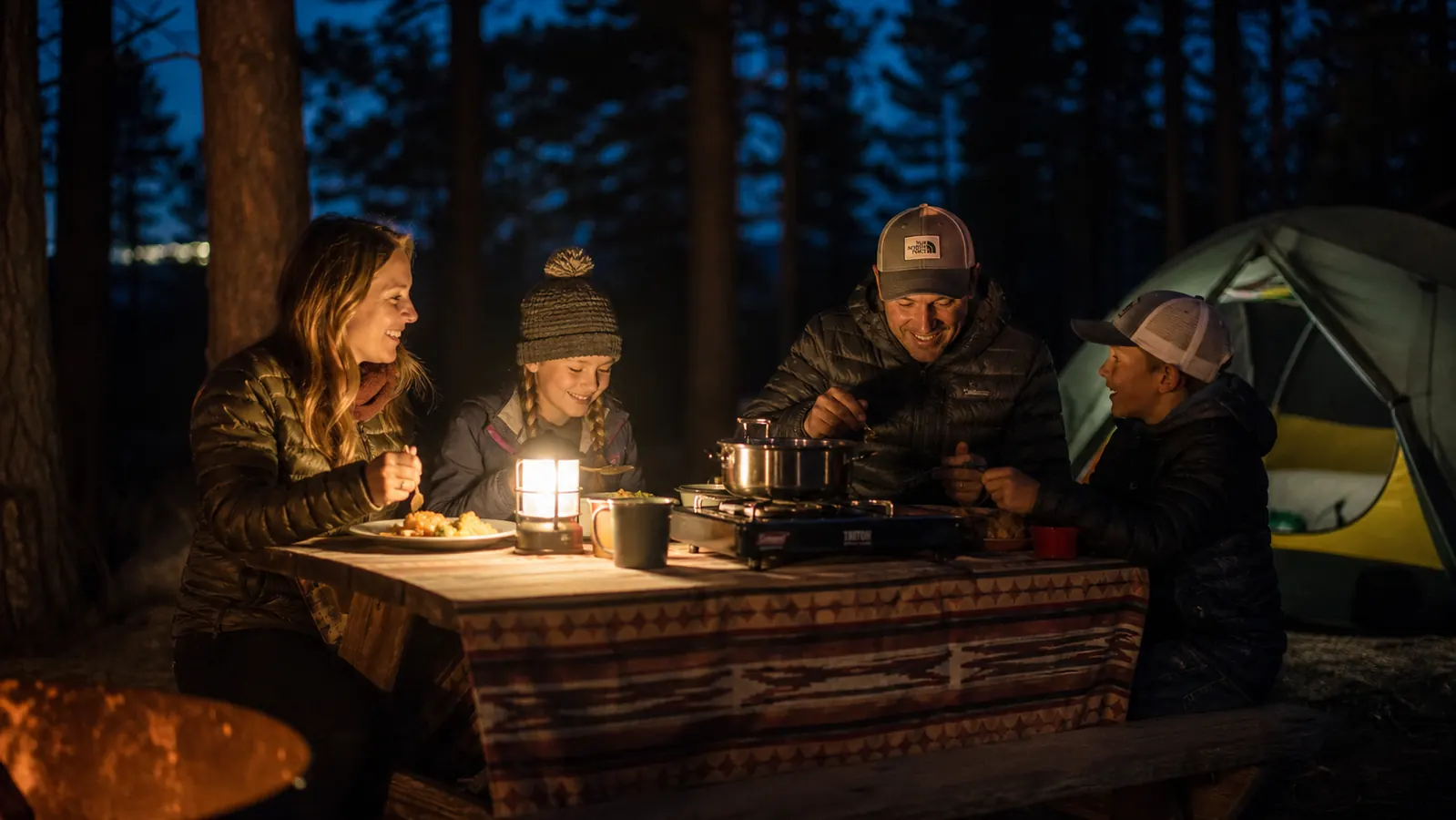
The Gas One GS-3400P: the stove that makes this whole system work.
Runs on propane or butane, lights on the first click, and packs down small enough to go on every trip. Rated 4.6 stars across nearly 15,000 verified purchases. See the current price on Amazon before your next trip.
Amazon Check Today's Price on Amazon →