
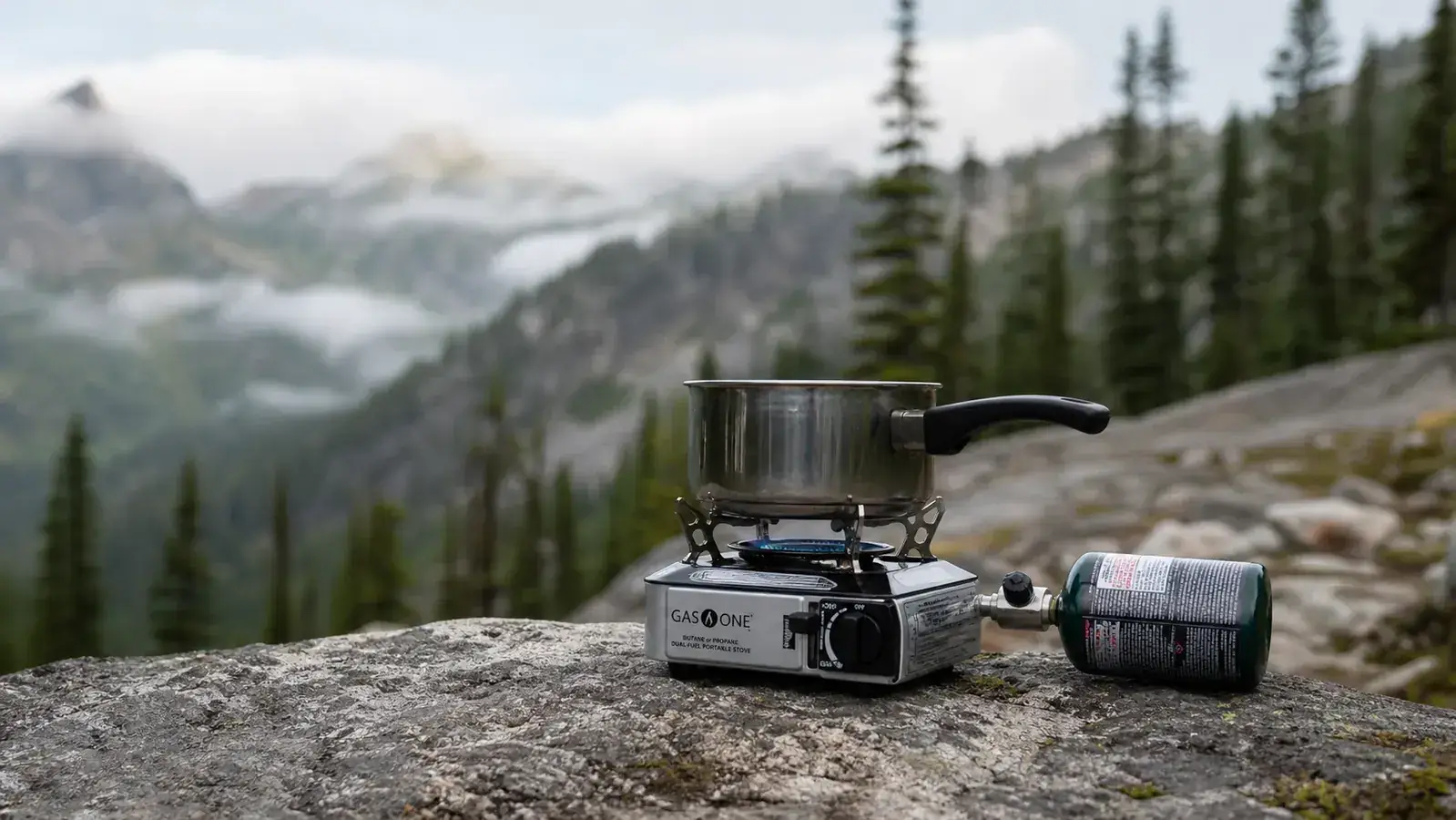
The first time I used the Gas One GS-3400P, I was cooking scrambled eggs for four people on a cold Saturday morning at Mammoth Cave Campground in Kentucky. The temperature had dropped to 38 degrees overnight, I had half a butane canister left from the last trip, and my old single-fuel stove would not even light. I had picked up the Gas One a few weeks earlier mostly because I was tired of that exact situation. I connected the butane, adjusted the flame, and had eggs on plates in about eight minutes. That was the start of what has now been two full camping seasons with this stove.
The Gas One GS-3400P is a dual-fuel portable camp stove that runs on either propane or butane canisters. It is a single-burner design with a simple push-igniter and a pressure-regulated flame control. Priced affordably, it sits near the bottom of the camp stove price ladder. I have now cooked on it across roughly 22 camping nights, in temperatures from the mid-30s to high 80s, including three trips where I had to switch fuel types mid-weekend. Here is what I found.
The Quick Verdict
A reliable, genuinely portable dual-fuel stove that punches well above its price point. The fuel flexibility alone makes it worth carrying.
Amazon Check Today's Price →Still cooking on a single-fuel stove that lets you down in the cold? The GS-3400P solves that at a budget price.
The Gas One GS-3400P runs on propane or butane, fits in a daypack side pocket, and has an integrated piezo igniter that actually works. It is currently one of the best-reviewed budget compact camp stoves on Amazon.
Amazon Check Today's Price on Amazon →How I Have Used It Over Two Seasons
My camping style is mostly car-camping with occasional weekend backpacking. I lead group trips a few times a year for a crew of four to eight people, and I cook a lot at camp. I use a stove every single morning (coffee, oatmeal, eggs) and usually at least one dinner per trip when fire conditions are restricted or the weather is miserable. So the GS-3400P has seen a full range of campsite conditions, not just fair-weather weekend use.
I have run it on both ISO butane canisters (the small 230g kind) and standard 1lb green propane canisters. I have cooked on it in wind, in light rain under a tarp, in high heat, and in near-freezing mornings. I have used it as the only stove on a trip and as a second burner alongside my bigger two-burner Coleman when feeding a larger group. It has lived in the back of my truck, been tossed into stuff sacks, and survived a rainy day strapped to the outside of a soft cooler. Nothing has broken.
For context on what I was cooking: a lot of scrambled eggs and coffee, a few one-pot pasta and rice meals, some soup and chili, and at least a dozen rounds of boiling water for pour-over coffee or instant oatmeal. Nothing that demands precision temperature control, but nothing forgiving either. A dropped flame on a cold morning with a wet burner tells you a lot about a stove.
Dual-Fuel Performance in the Field
This is the headline feature and the main reason I bought the GS-3400P over a cheaper single-fuel option. Most budget camp stoves lock you into one fuel type. That might not matter on a well-planned trip, but in practice, you run out of one canister, or the hardware store near the campsite only carries propane, or you have a half-used butane can from your last trip and do not want to start a fresh propane one. Being able to use either is a practical advantage that matters more the longer you camp.
The fuel swap is straightforward. The stove ships with two adapters: one for butane canisters (the recessed valve type used on most ISO canisters) and one for propane (the standard threaded fitting used on green Coleman-style cans). Switching between them takes about 30 seconds with a coin. I have done it mid-trip three times and it was never a problem. One thing worth knowing: the stove does not have a self-sealing valve, so make sure the fuel canister is fully removed before swapping the adapter.
Performance on propane is strong. A liter of water came to a boil in just under four minutes in my informal tests at around 60-degree ambient temperatures. On butane, that stretched to about five and a half minutes, which is normal since butane delivers slightly lower pressure. In cold weather (under 45 degrees), butane vapor pressure drops and you will notice a weaker flame. If you are camping in cold conditions, carry propane. Propane handles cold much better than butane does.
Build Quality and Day-to-Day Durability
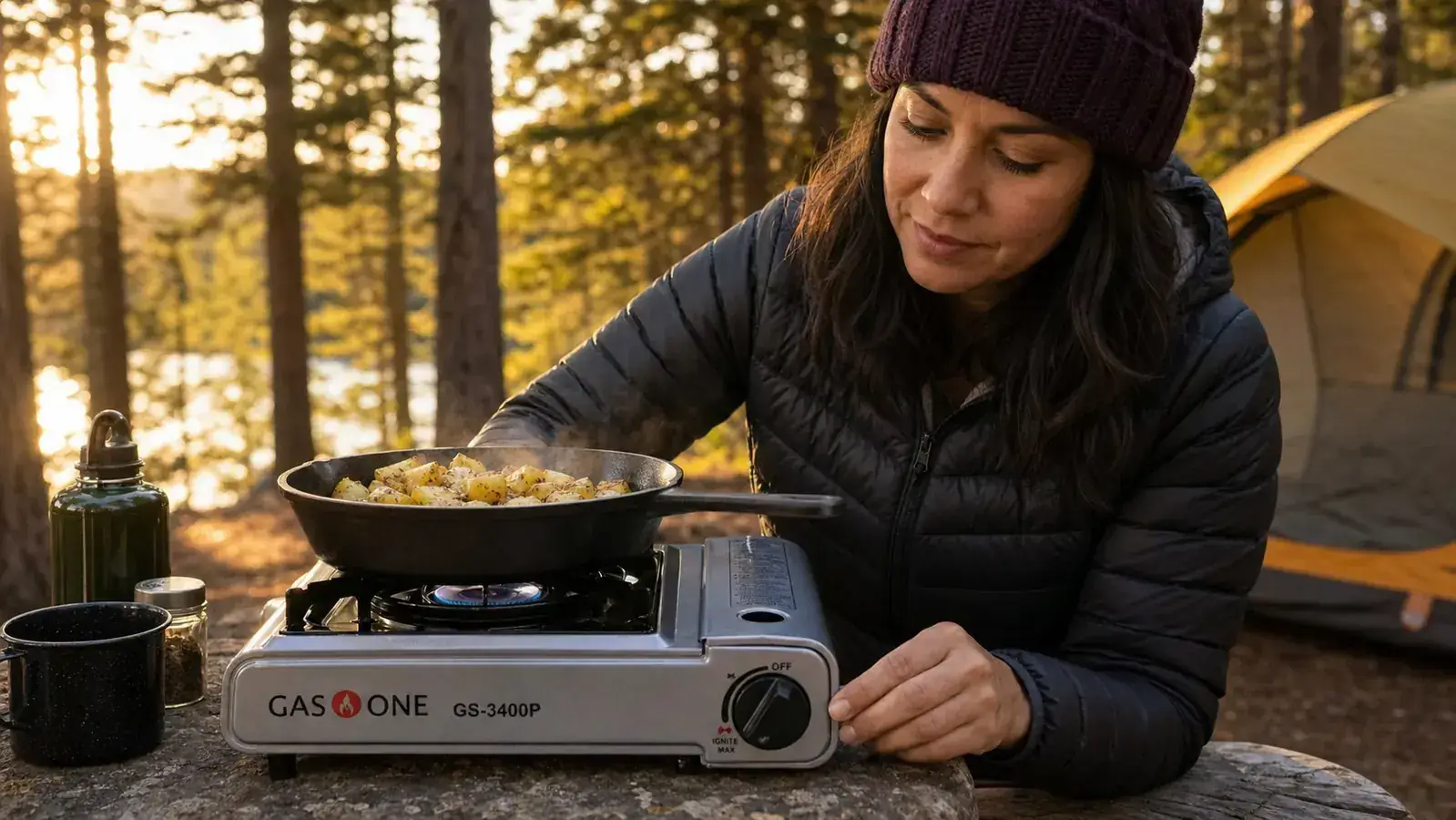
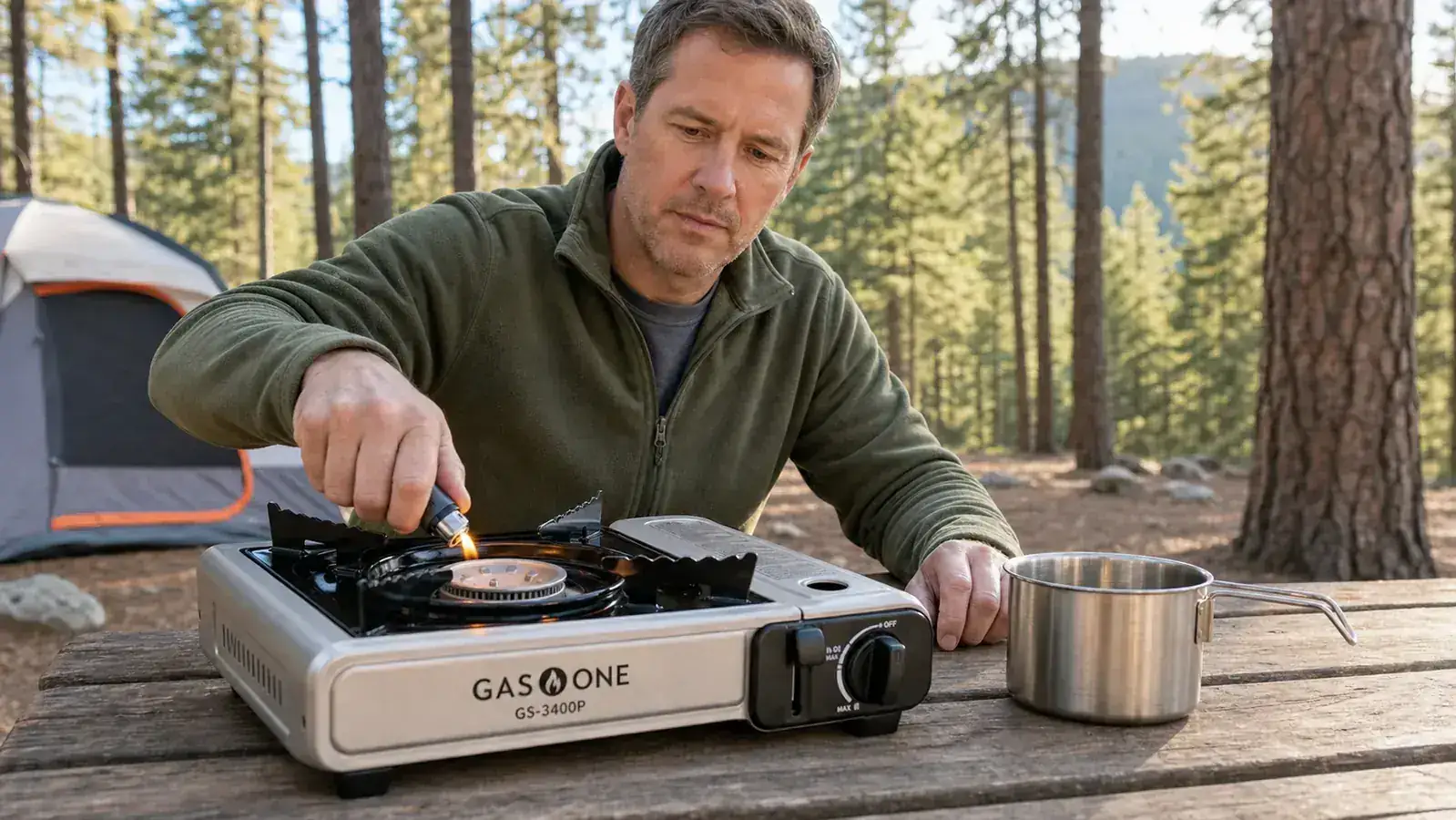
The GS-3400P is not a premium stove. The body is lightweight steel with a plastic fuel-adapter collar, and the burner grate is a simple stamped-wire design. It feels exactly like what it is: a well-made budget stove, not an MSR or Jetboil. That said, nothing has rattled loose, cracked, or corroded in two seasons of regular use. The igniter still works every time. The flame control knob turns smoothly. The fold-out wind panels on the burner base have held their shape.
The wind panels are worth a separate mention because they are more useful than I expected. The GS-3400P has three folding metal panels that wrap around the burner to block wind. They are not going to keep you cooking in a 30-mph headwind, but they handle a stiff breeze well enough that I do not need to go hunting for a windbreak every time I want to boil water. On a trip to Great Smoky Mountains last October, I cooked multiple meals in sustained 15-mph gusts without any meaningful performance hit.
The carry case is a thin nylon stuff sack. It keeps the stove from rattling around and protects the burner head, but it is not padded. I toss the stove in my gear bin inside the sack and have had no issues. If you are packing it inside a backpack, wrap it in a fleece or a shirt. The stove itself weighs about 12 ounces, which is not ultralight but is absolutely manageable for car-camping and even weekend backpacking trips.
Two seasons, 22 nights, a dozen fuel swaps, one drizzly mountain cook session. Nothing has broken and the igniter still sparks first try.
Simmer Control and Cooking Performance
The flame knob gives you a usable range from a low simmer to a pretty aggressive boil. I have cooked rice on it without scorching, which means the low end is genuinely low. I have also pushed it to full blast for a fast pasta boil. The burner head is about 3.5 inches in diameter, so it works well with cookware up to about a 10-inch pan. I have used it with a 2-quart saucepan, a 10-inch cast iron skillet, and a 6-cup GSI kettle without any stability issues, though the cast iron was right at the edge of the grate width.
Heat distribution is decent but not even. The hot spot is in the center, and you will notice uneven browning on a larger pan. For camp cooking that is usually fine: you are not making crepes, you are scrambling eggs and heating soup. If you need precision, this is not the stove for it. But for practical camp cooking for one to four people, the flame performance is more than adequate.
Where the GS-3400P Falls Short
The stove does have real limitations. First, it is a single burner. If you are cooking a full camp breakfast for four or more people, one burner creates a bottleneck. I have managed it by sequencing: heat the pan, cook the eggs, cover and keep warm while I boil water for coffee. But it takes longer and requires planning. If you regularly cook for groups larger than two or three, you will want a two-burner setup as your primary and the GS-3400P as a backup or supplemental burner.
Second, the grate stability with larger cookware is just okay. A wide flat skillet can wobble if you are too aggressive stirring. The four grate spokes hold a centered pot fine, but the design is not forgiving of off-center placement. I have learned to keep my heaviest cookware centered and never set a pot down at an angle.
Third, the fuel canisters are sold separately. This is standard for camp stoves, but worth flagging for new campers: the stove does not come with any fuel. You will need to pick up a 1lb propane canister or an ISO butane canister before your first cook. Both are easy to find at Walmart, REI, or camping supply stores, but factor the cost into your total purchase.
What I Liked
- Runs on both propane and butane, genuinely useful in practice
- Compact and lightweight at around 12 ounces
- Push-button igniter works reliably even after two seasons
- Built-in wind panels handle moderate breezes without performance loss
- Solid simmer-to-boil range for a budget stove
- Stable with standard camp cookware up to 10 inches
Where It Falls Short
- Single burner only, creates a bottleneck for larger group cooking
- Butane fuel struggles in cold weather below 45 degrees (use propane instead)
- Grate can be wobbly with large or off-center cookware
- Not self-sealing, so fuel swaps require full canister removal
- Carry case is not padded, no protection for rough handling
Comparing It to What I Used Before
Before the GS-3400P, my go-to was a Coleman Camp Propane Stove, the basic single-burner bottletop model. It is a fine stove. But it only runs on propane, the igniter wore out after about a year and I started carrying a lighter, and it has no wind panels at all. The Gas One wins on fuel flexibility, igniter reliability, and wind resistance. The Coleman is sturdier feeling and has a slightly wider grate. If you already have a collection of propane canisters and never camp below 50 degrees, the Coleman is serviceable. But for anyone who wants the flexibility to use whatever fuel is on hand, the GS-3400P is the better call.
I have also cooked alongside friends using Jetboil and MSR pocket rocket-style stoves. Those are better stoves in most measurable ways: faster boil times, more efficient fuel burn, more packable designs. They also cost three to six times more. The GS-3400P is not trying to compete with those. It is a different tool for a different buyer, one who wants reliable dual-fuel performance for family car-camping at a price that does not sting.
Who This Is For
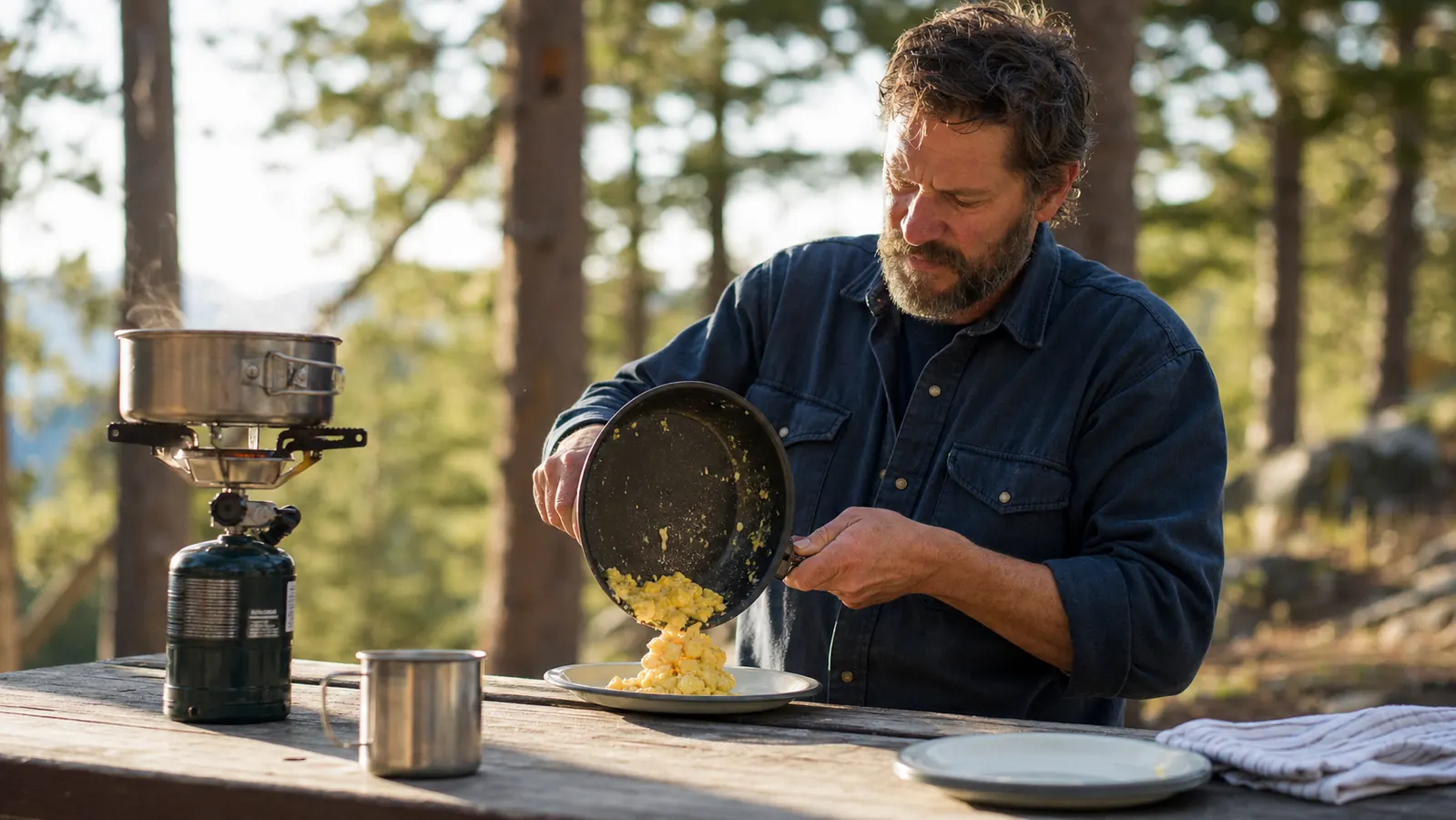
The Gas One GS-3400P is the right stove if you are a weekend car-camper or car-camping family who wants a compact, portable burner that can run on whatever fuel you have on hand. It is especially well-suited for new campers who do not want to spend $100-plus on a stove before they know how much they will camp, and for experienced campers who want a reliable backup burner or a dedicated one-person stove for solo trips. At around $30, the price-to-performance ratio is hard to argue with. If you camp a handful of times a year, cook basic camp meals, and hate being stranded because you have the wrong fuel type, this stove fills the gap cleanly.
Who Should Skip It
Skip the GS-3400P if you regularly cook for groups larger than four and need two burners running simultaneously. Skip it if you do a lot of cold-weather camping below freezing and plan to run butane, because the vapor pressure issues will frustrate you. Skip it if you want a stove you can take on a long backpacking trip where weight and pack size are critical: at 12 ounces plus the fuel canister, there are lighter integrated systems that make more sense. And skip it if you need serious precision heat control for anything more demanding than camp cooking basics.
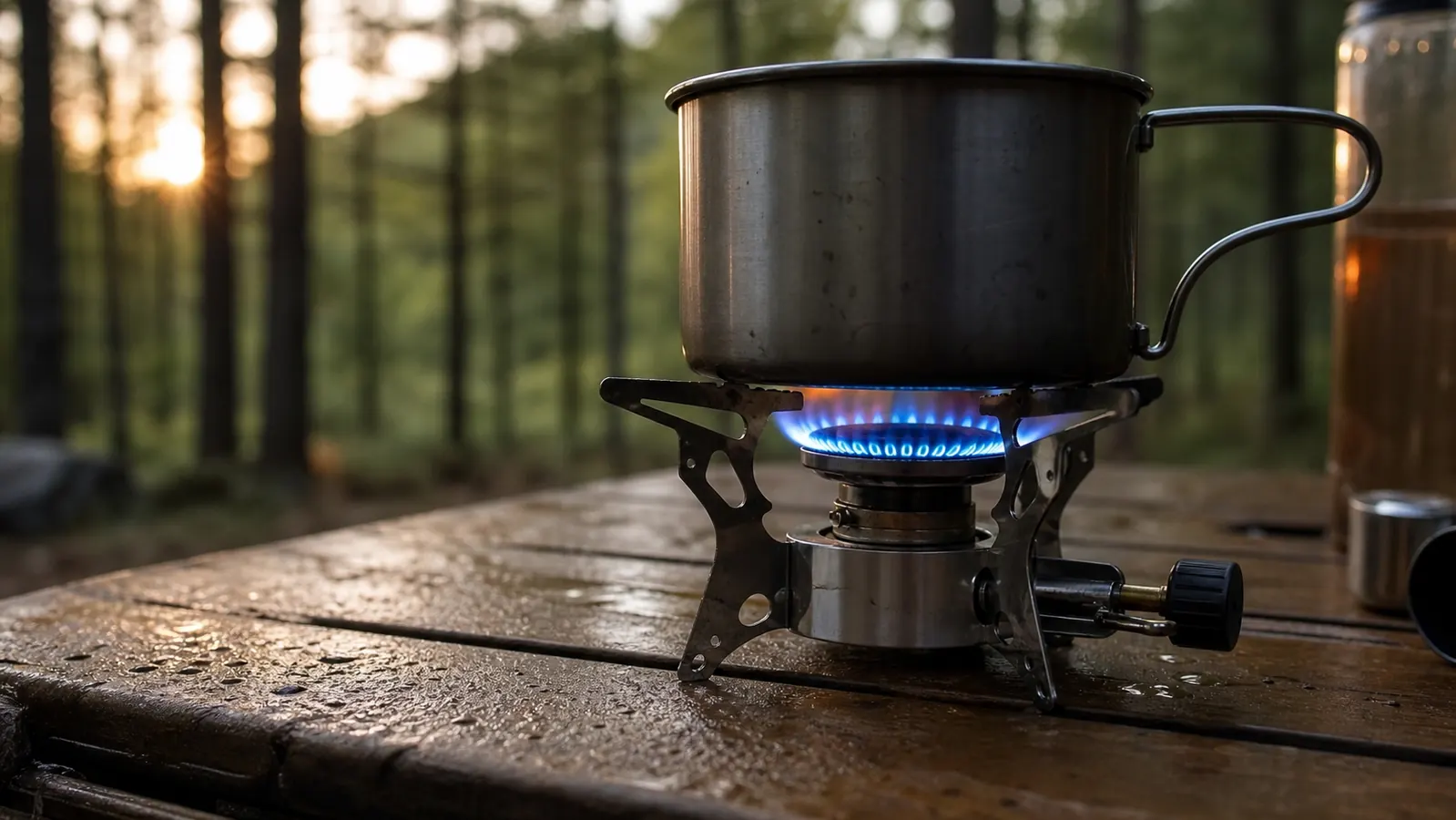
Two seasons in, this is still the stove I grab first when I am cooking solo or for a small group.
The Gas One GS-3400P dual-fuel camp stove is compact, reliable, and one of the most versatile budget options. If you want to see current pricing and recent reviews from other campers, check it out on Amazon.
Amazon Check Today's Price on Amazon →