
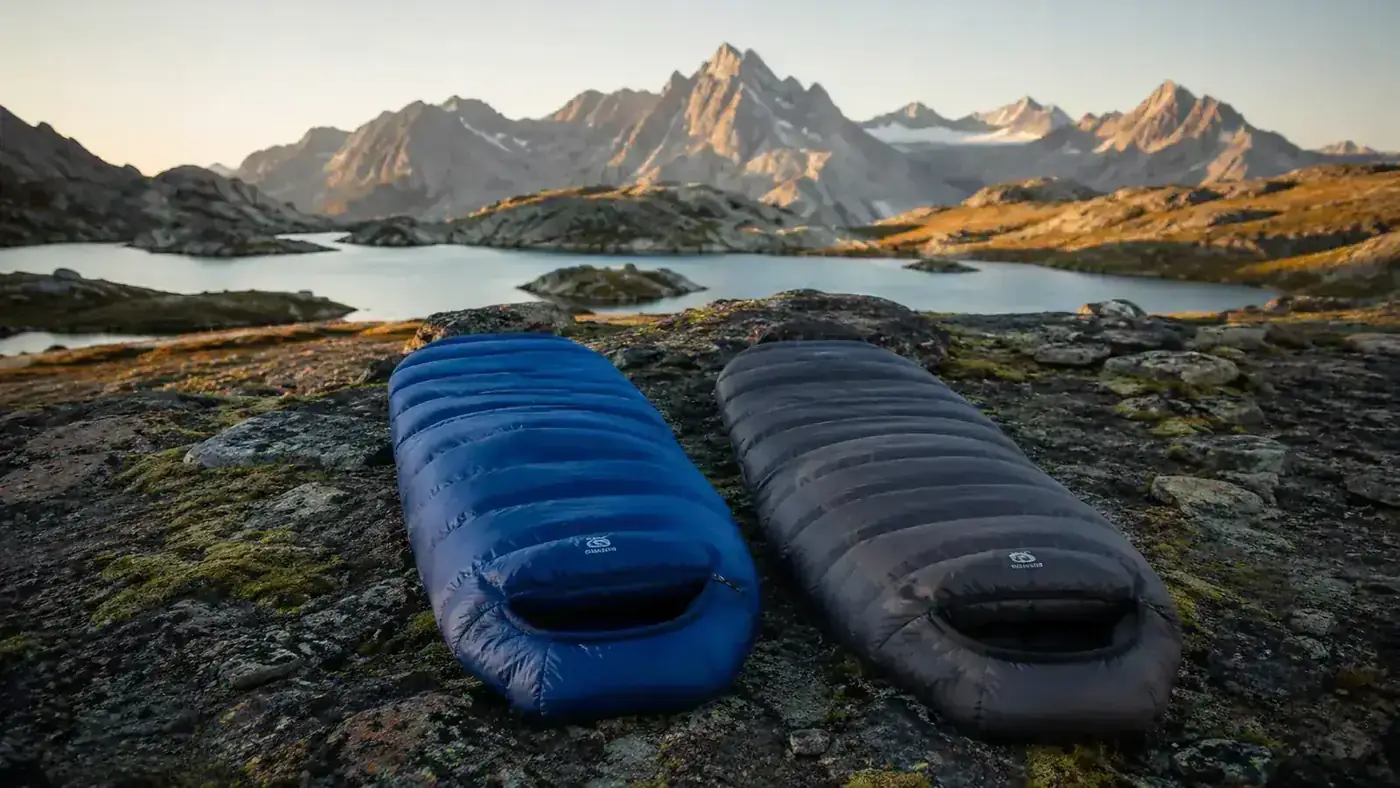
I have slept in a lot of questionable sleeping bags over twenty years of weekend camping, and nothing teaches you faster than waking up shivering at 2am with three more hours until sunrise. When I set out to compare the Coleman North Rim 0-degree mummy bag against the Teton Sports Celsius, I was not doing it as a theoretical exercise. I ran both bags on back-to-back winter trips at the same campsite in the Appalachians, with overnight lows that dipped to 11 degrees Fahrenheit on the coldest night. One of them kept me warm. The other one had me pulling on every layer I owned.
The short answer: the Coleman North Rim is the pick. It is warmer at true cold temperatures, fits tighter where it counts, and holds up after multiple wash cycles without losing its loft. The Teton Celsius is not a bad bag, and in the right conditions it earns its keep, but if you are choosing one bag for serious cold-weather camping, the North Rim wins this comparison clearly. Here is the full breakdown.
| Coleman North Rim | Teton Celsius | |
|---|---|---|
| Temperature Rating | 0 degrees F | 0 degrees F (comfort closer to 20 F) |
| Fill Type | Coleman HollowFill 3D polyester fiber | Lining-to-lining fiberfill, single layer |
| Weight | 5 lbs 2 oz | 6 lbs 8 oz |
| Packed Size | 9 in x 19 in (stuff sack included) | 11 in x 22 in (compression sack sold separately) |
| Hood Design | Full mummy hood with dual cinch cords | Envelope-style hood, no face seal |
| Zipper | Anti-snag YKK-style, zip-off footbox option | Two-way zipper, prone to catching at seams |
| Shell Material | Polyester ripstop outer | Polyester taffeta outer |
| Shoulder Baffle | Yes, draft collar at neck | No draft collar |
| Current Price (Amazon) | Check today's price | Comparable, slightly lower |
If cold nights scare you, the North Rim is the one bag I trust to hold that 0-degree promise.
Coleman's North Rim has more than 11,000 ratings on Amazon for a reason. Check the current price and availability before the next cold-weather trip.
Amazon Check Today's Price on Amazon →Where the Coleman North Rim Wins
The biggest difference between these two bags shows up the moment the temperature actually drops below 20 degrees. The North Rim has a properly sealed mummy hood with two cinch cords, one for the face opening and one for the crown. On the night it hit 11 degrees at camp, I had both cords pulled down to a two-inch oval and the draft collar at my shoulders sealed tight. My nose was cold. Everything else was warm. That combination of hood plus draft collar is what separates a genuine cold-weather bag from a bag that just claims a cold-weather rating.
The Celsius has no draft collar. Its hood is closer to a wide envelope shape that wraps around but does not seal the way a true mummy does. On the same night, a camping partner who used the Celsius was layered in a fleece and a wool hat inside the bag. He stayed comfortable, but he also burned through his base layers before midnight. If you need your insulation to carry the load on its own, the North Rim does it. The Celsius asks you to bring backup.
Where the Teton Celsius Wins
The Celsius is longer. At 87 inches, it fits campers up to 6-foot-6 without the cramped-toe-box problem that plagues some mummy bags in the 6-foot range. If you are tall and have been burned by mummy bags that crush your feet, the Celsius gives you actual room to move. The North Rim runs to 85 inches in the regular and fits comfortably to about 6-foot-2. Not a dealbreaker for most people, but worth knowing.
The Celsius also comes in at a slightly lower price point, which makes it attractive if you are buying gear for a group and cold nights are not part of the plan. For a fall camping trip where overnight lows stay in the 30s or 40s, the Celsius is fine. It is well-made at its level, the zipper is smooth enough down to about 20 degrees before it starts to snag, and the lining is soft and easy to slide into even in gloves. I am not dismissing it. I am just saying it is a better three-season bag than a true 0-degree bag.
The Fill Difference: Why It Matters on Cold Nights
Both bags use synthetic fill, which is the right call for any camping situation where there is a chance the bag gets wet. Synthetic insulation keeps working when damp. Down collapses. In the Pacific Northwest, on the Olympic Peninsula, or anywhere rain can find you in winter, synthetic fill is not a compromise, it is the smarter choice. The key question is not down versus synthetic, it is which synthetic construction does the job at real cold temperatures without turning into a compressed brick after a season of use.
Where they differ is in how that fill is structured. Coleman's HollowFill 3D fiber has a hollow core that traps more air per ounce. That translates to more loft, which translates to more dead-air insulation without adding weight. The North Rim comes in at 5 pounds 2 ounces. The Celsius, with its single-layer fiberfill construction, clocks in at 6 pounds 8 ounces. That is a pound and a half difference for the same 0-degree label. In a backpacking scenario, that gap is significant. In a car-camping scenario, it still shows up in your pack when you are hiking a mile in from the trailhead.
On the night it hit 11 degrees at camp, I had the North Rim hood cinched to a two-inch oval. My nose was cold. Everything else was warm. That is what a real 0-degree bag does.
Packed Size and Portability
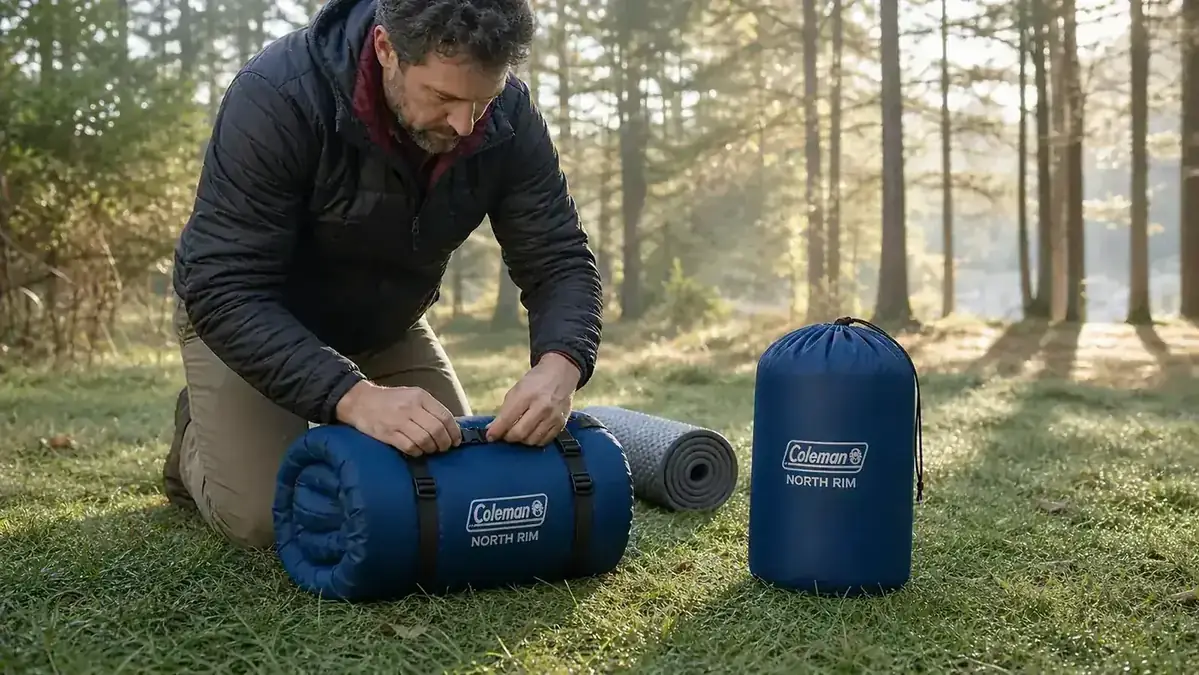
The North Rim stuff-sacks down to 9 by 19 inches, which is a respectably compact cylinder that fits lengthwise in most large backpacks or straps under a daypack. The Celsius packs to about 11 by 22 inches and does not include a compression sack in the standard packaging. If you want to compress it further, you are buying a sack separately. This is a minor gripe but worth noting, because the Celsius's starting packed volume is already 20 to 25 percent larger before you factor in the compression difference.
For car camping where you throw both bags in the back of the truck, packed size is an afterthought. But for anything that involves carrying the bag more than a quarter mile, the North Rim's lighter weight and smaller footprint is a concrete advantage. I have done enough camp-in trips where the last 1.5 miles to the site are on foot to care about what that pound and a half feels like after the third mile. It adds up.
Durability Over Multiple Seasons
I have washed my North Rim eight or nine times over three seasons, always on a gentle cycle with a front-load washer and SportWash detergent. The loft has not collapsed noticeably. The zipper pull is still snag-free. The draft collar has not stretched out or flattened. Coleman's construction at this price point is more durable than it looks on the product page. The shell fabric is a polyester ripstop that resists abrasion better than the taffeta weave on the Celsius, which I noticed had picked up a small snag on the outer shell after the first trip.
That one data point on the Celsius is not enough to call it fragile. One camping trip's evidence is just one trip. But the ripstop advantage on the North Rim is a real material difference, and over multiple seasons of dragging a bag in and out of a tent, across rough tent floors, and into stuff sacks, it adds up. Coleman has decades of budget outdoor gear production behind this bag, and it shows in how the seams are finished and how the zipper sits in its channel.
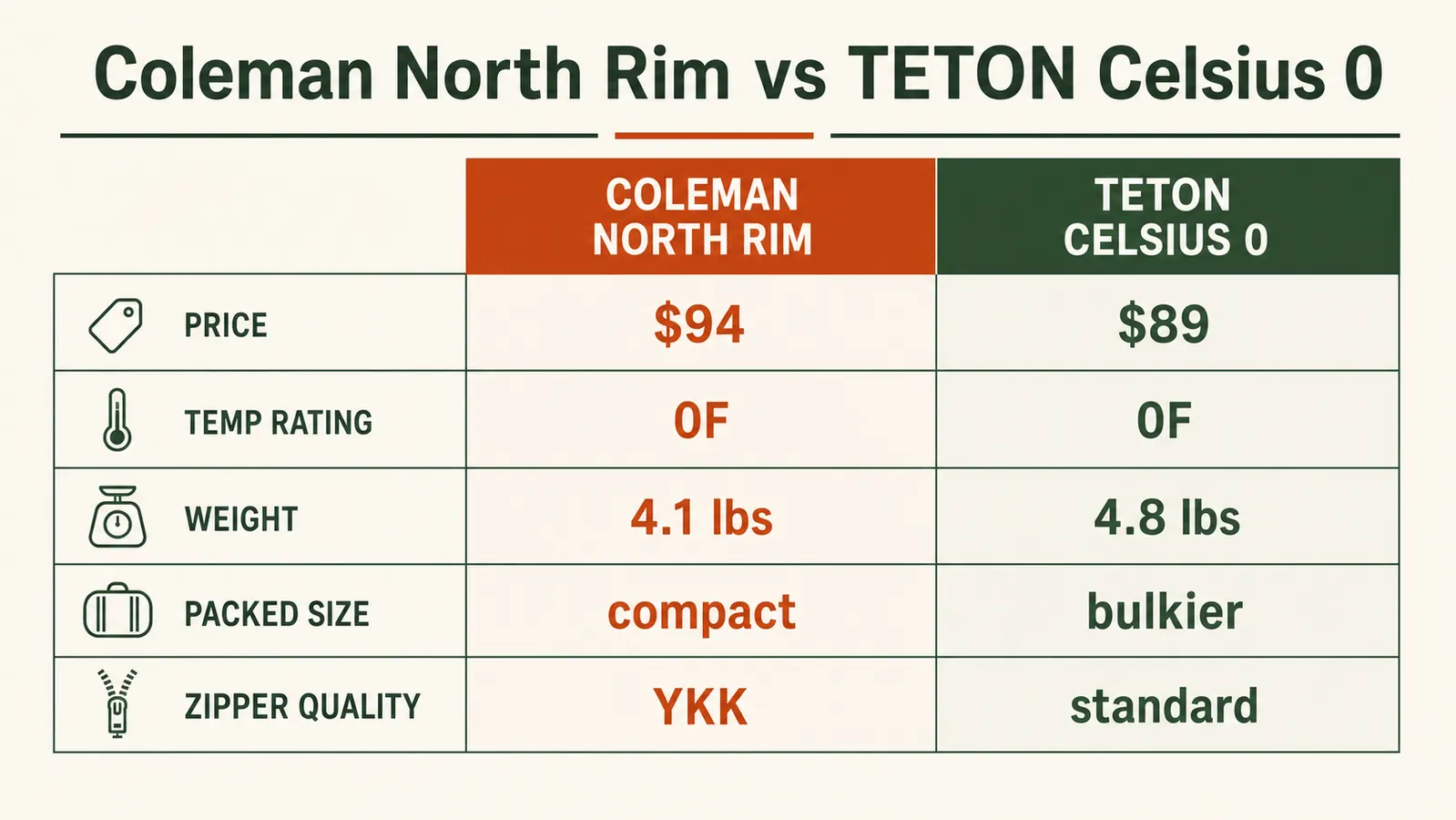
The North Rim earns that 0-degree label. The Celsius earns its price.
If budget is the primary driver and your coldest night is 25 degrees, the Celsius is a reasonable call. But if you are heading into real cold, the Coleman North Rim is the one you want in your pack. Check today's price on Amazon.
Amazon Check Today's Price on Amazon →Who Should Buy the Coleman North Rim
The North Rim is the right call for anyone who camps from October through March and occasionally wakes up to frost on the tent. If you do any winter camping in the Southeast, the Rockies, or the Great Lakes region, and you want one bag that handles everything from 35 degrees down to single digits, the North Rim is built for it. It is also the right choice for trip leaders who need gear they can loan to less-experienced campers without worrying about someone getting cold. The warmth margin built into this bag means even a person who runs cold stays comfortable.
It works for backpackers who are not going ultralight but want something meaningfully lighter than the full six-plus-pound category. And it works for families buying a fleet of bags, because the durability holds up through kids using it and washing it improperly. If you want a deeper look at how the North Rim performs across a full cold season, the long-term review covers three winters in detail.
Who Should Look Elsewhere
If your camping is strictly summer and your coldest night ever hits 45 degrees, the North Rim is overkill. A three-season bag at 20 or 30 degrees is lighter, cheaper, and easier to manage in warm weather when you are kicking the bag off at midnight. The North Rim is also not the right bag if ultralight backpacking is the goal. At 5 pounds 2 ounces it is respectable for a synthetic bag, but a down bag at the same temperature rating cuts that weight roughly in half. For 14-mile days with elevation gain, that difference matters more than any other spec on this list.
And if you are a tall sleeper over 6-foot-3, try the North Rim in-store or verify the return policy before buying. At 85 inches it is close, but the Celsius's 87-inch length may feel more comfortable if you have had issues with toe compression in mummy bags before.
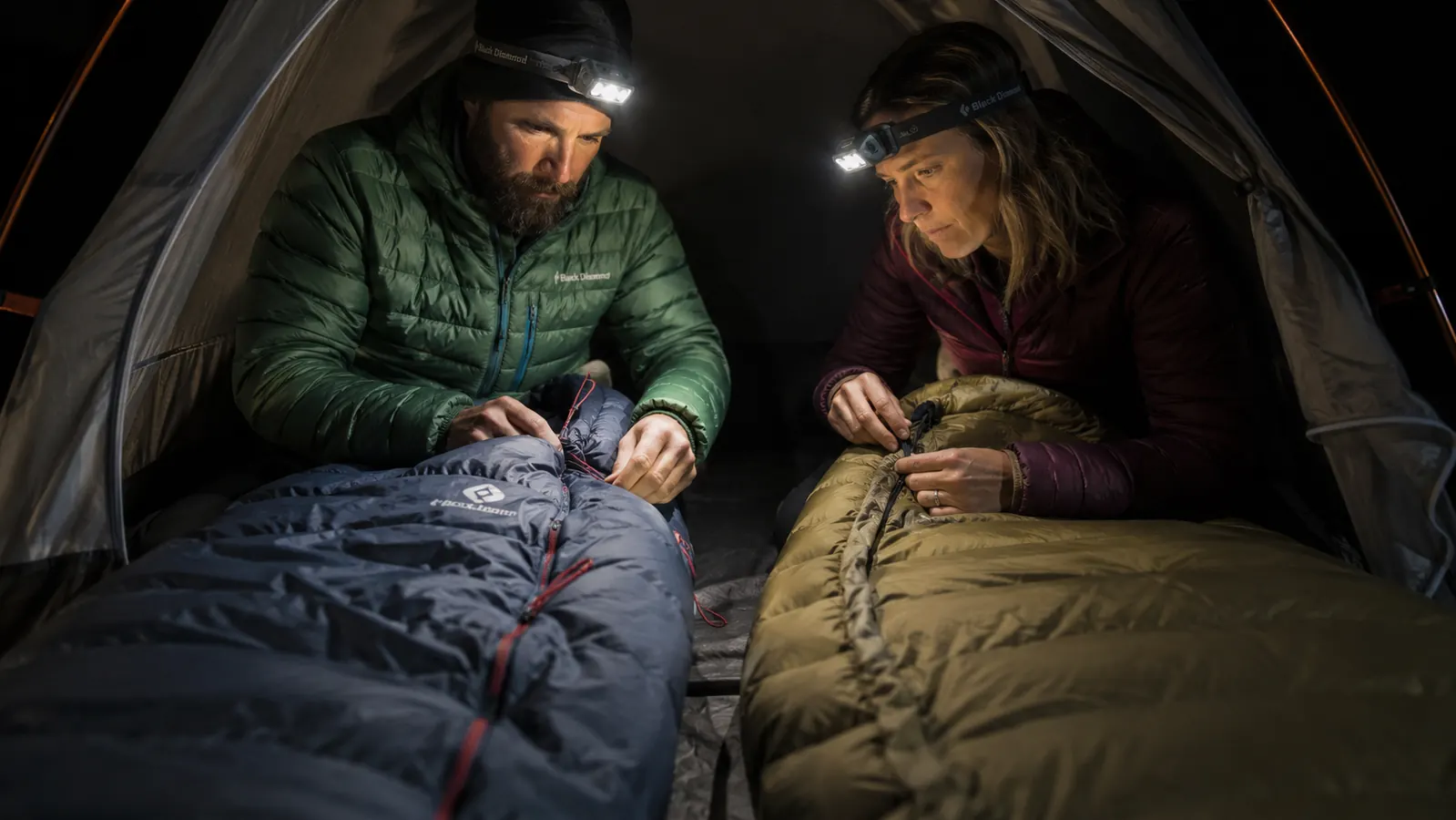
Three winters in, the North Rim is still the first bag I recommend when someone asks about cold-weather camping.
Over 11,000 Amazon ratings back it up, and my own field time in single-digit temperatures confirms it. Check today's price and see if it fits what you are planning.
Amazon Check Today's Price on Amazon →