
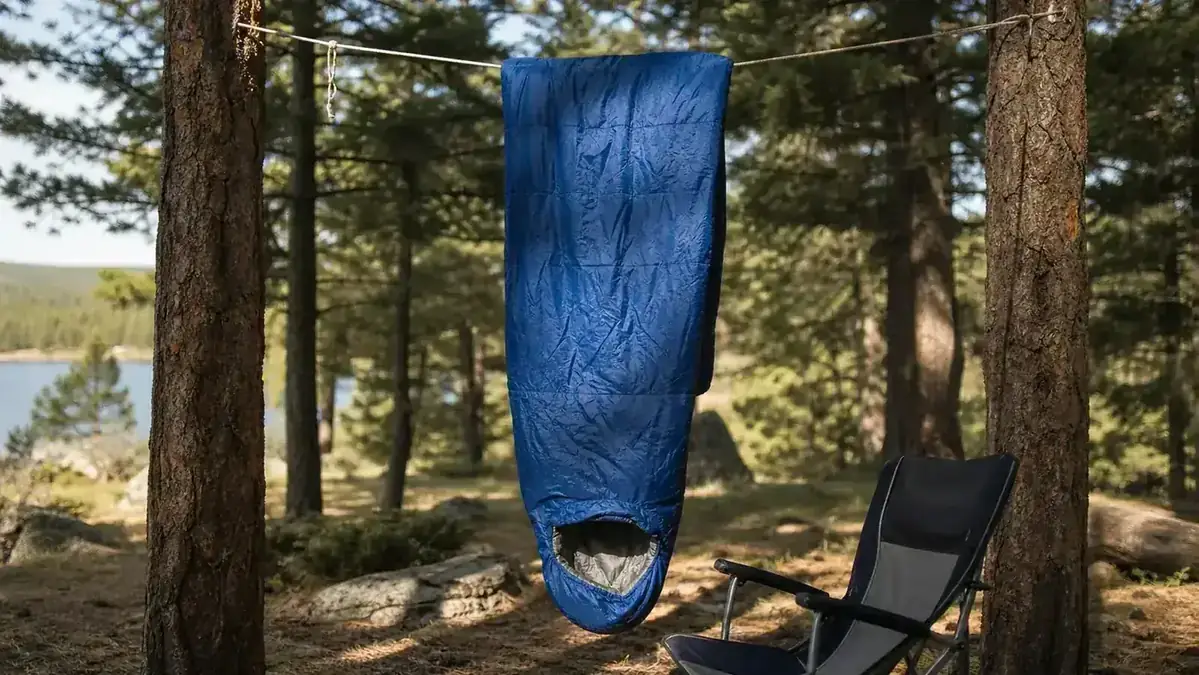
The first time I unrolled the Coleman North Rim at a campsite, it was a Friday night in early November, somewhere in the Ozarks off a gravel forest road, and the forecast said 28 degrees by morning. I had been skeptical. Budget 0-degree bags have a habit of promising one temperature rating on the box and delivering something closer to "you will survive but you won't sleep." I had burned myself on that before with a different bag that turned me into a shivering, miserable lump by 3am. So when I slid into the North Rim for the first time and felt the hood cinch down around my face and woke up genuinely warm at 6am with frost on the tent walls, I paid attention.
That was three camping seasons ago. Since then the Coleman North Rim 0-degree mummy bag has been on every cold-weather trip I've led or taken solo, from a late-October group trip at a state park in Missouri to a February overnight at a trailhead shelter in the Arkansas highlands where the mercury hit 14 degrees. I've packed it in, machine-washed it more times than I should probably admit, and watched how it performs as the loft slowly compresses over dozens of uses. This review is based on that full run, not a weekend test, and I'm going to tell you exactly what it does well and where it leaves you wanting more.
The Quick Verdict
A genuine 0-degree-capable mummy bag at a budget-friendly price that punches well above its weight for three-season camping and cold weekend trips, though it's heavier than it should be for serious backpacking.
Amazon Check Today's Price →Heading into a cold-weather weekend and need a bag that actually works at freezing temps?
The Coleman North Rim is currently available on Amazon with thousands of verified reviews and fast shipping. Check the current price before your next trip.
Amazon Check Today's Price on Amazon →How I've Used the North Rim Over Three Seasons
My testing wasn't organized into a spreadsheet. It was just camping. But I kept a trail notebook, which means I have specific nights to reference rather than vague impressions. Here's the short version: November at Roaring River State Park in Missouri, temps bottomed at 31 degrees. Comfortable and warm the full night, didn't need to cinch the hood all the way. December at Hobbs State Park, 23 degrees, light wind, I slept in a base layer and wool socks. Woke once to adjust the hood but otherwise solid. February highland overnight at a trailhead shelter near Mount Magazine in Arkansas, 14 degrees and a wet cold that seeps in differently than a dry freeze. That was the night I noticed some limits, which I'll get to. The point is I'm not drawing conclusions from one or two trips. This bag has been to the campsite over and over.
I also ran a late-October group trip where I brought four friends who hadn't camped in cold weather before. Three of them rented or borrowed various rectangular bags rated to 40 degrees and spent the night miserable. One was up by 1am, huddled in a jacket, asking if there was room in my car. I was the only one who slept through till 5am without waking. That's the kind of real-world comparison that sticks with you more than any side-by-side lab test, and it tells you a lot about why temperature rating and bag shape both matter.
For most of these trips I've been using the North Rim on a standard 1.5-inch foam pad and occasionally on an inflatable pad, which makes a meaningful difference in cold-floor situations. Keep that in mind if you're camping on frozen ground. The bag only insulates from the top. What's underneath you is entirely the pad's job, and a cheap foam pad on a frozen December ground will undo the warmest bag you own.
Insulation and Temperature Performance
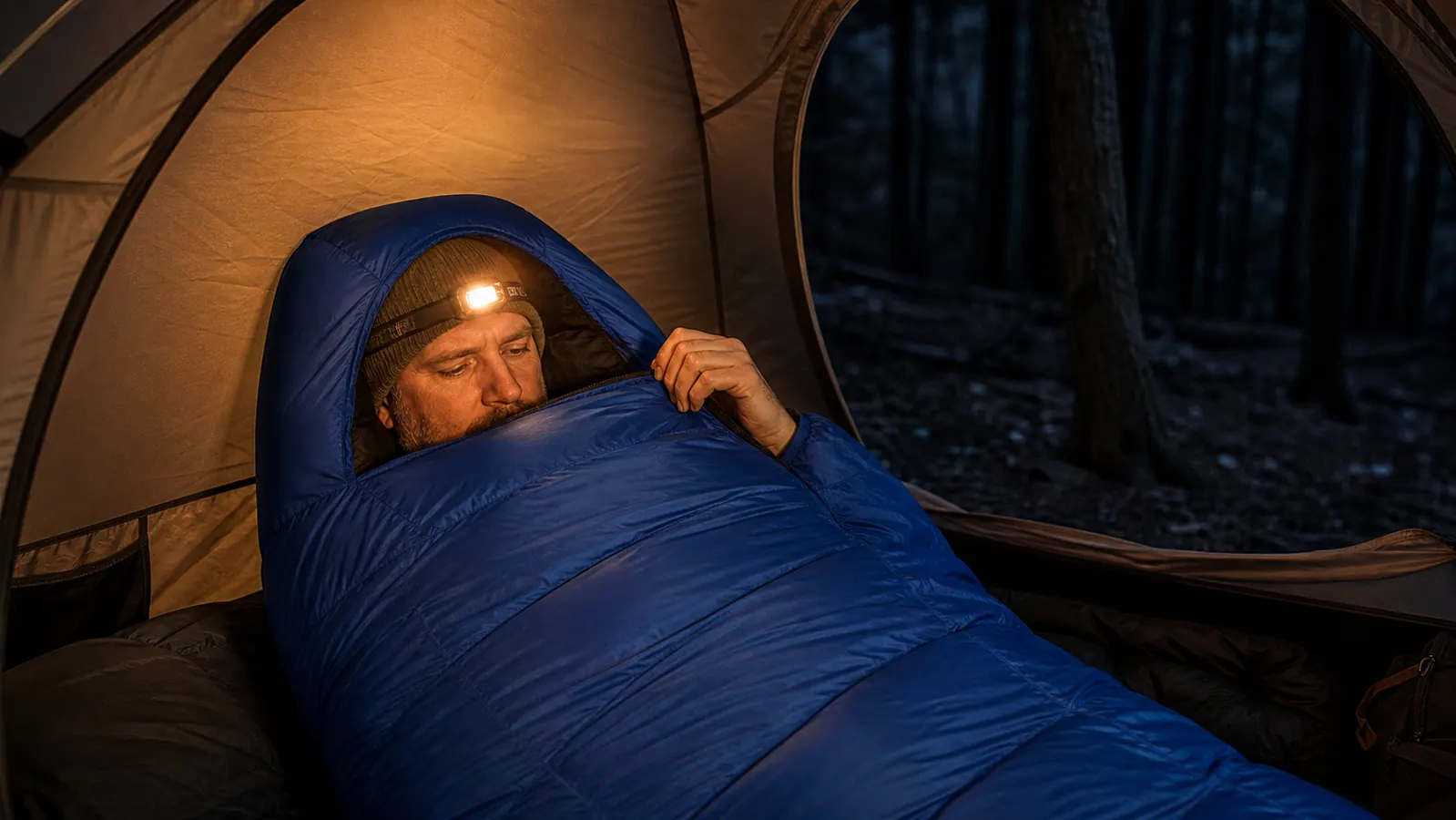
Coleman rates this bag to 0 degrees Fahrenheit. In practice, I'd call that a survival rating for most male sleepers of average body temperature, which is the industry-standard way these numbers are calculated. My comfort floor in the North Rim, sleeping in a base layer and wool socks, is right around 15 to 18 degrees. Below that, I'm awake and fighting the night. At 14 degrees with wet air, I added a fleece liner and that solved it. For most weekend campers doing fall and winter trips in the continental US, where lows rarely crack into single digits at the campgrounds most of us actually use, the North Rim handles the job without modification.
The insulation is a hollow-core polyester fill, not down. That matters for one practical reason: it maintains loft when wet. I've had mornings where condensation migrated into the bag and a down bag in that situation is a cold, sad mess. The North Rim shrugs it off. You lose a little warmth, but not the dramatic failure mode you get with wet down. For car-camping and trips where you're not obsessing over every ounce, that's a real durability advantage that down bags in the same price range can't match.
The mummy shape is where it earns its cold-weather credentials. The contoured hood cinches down with a drawstring to leave just your face exposed, and the draft collar around the shoulders seals in warmth effectively. I've slept in rectangular bags rated to 20 degrees and been colder at 30 degrees than I was in this bag at 18. Shape accounts for more warmth than most people realize, and if you've only ever camped with a rectangular bag, the difference the first time you use a well-fitted mummy bag will genuinely surprise you.
The mummy shape accounts for more warmth than most people realize. I've been warmer in the North Rim at 18 degrees than I was in a rectangular bag at 30.
Weight, Packability, and the Backpacking Question
Let me be straightforward here because this is the most common thing I get asked about. The Coleman North Rim weighs around 5 pounds 8 ounces depending on the size. For car-camping where you carry gear from the truck to the site, that's completely fine. For backpacking, that weight is a real cost. I took it on a 7-mile overnight in the Ouachita National Forest and felt it in my pack. I'd rather carry it on an out-and-back where the load goes lighter on day two, but on a loop trip with a full pack, you notice 5.5 pounds of sleeping bag.
It compresses into its included stuff sack to roughly the size of a medium-large watermelon. Not a backpacking-grade compression. You can get it into an 18-liter dry bag if you really work it, but it will eat a significant portion of your pack volume. If you're doing long trails with sub-25-degree nights, there are lighter bags that make more sense. If you're doing car-camping trips, weekend overlanding, or short overnights where base camp is within a couple miles of the trailhead, the weight is a non-issue and you won't think about it again.
Construction and Long-Term Durability
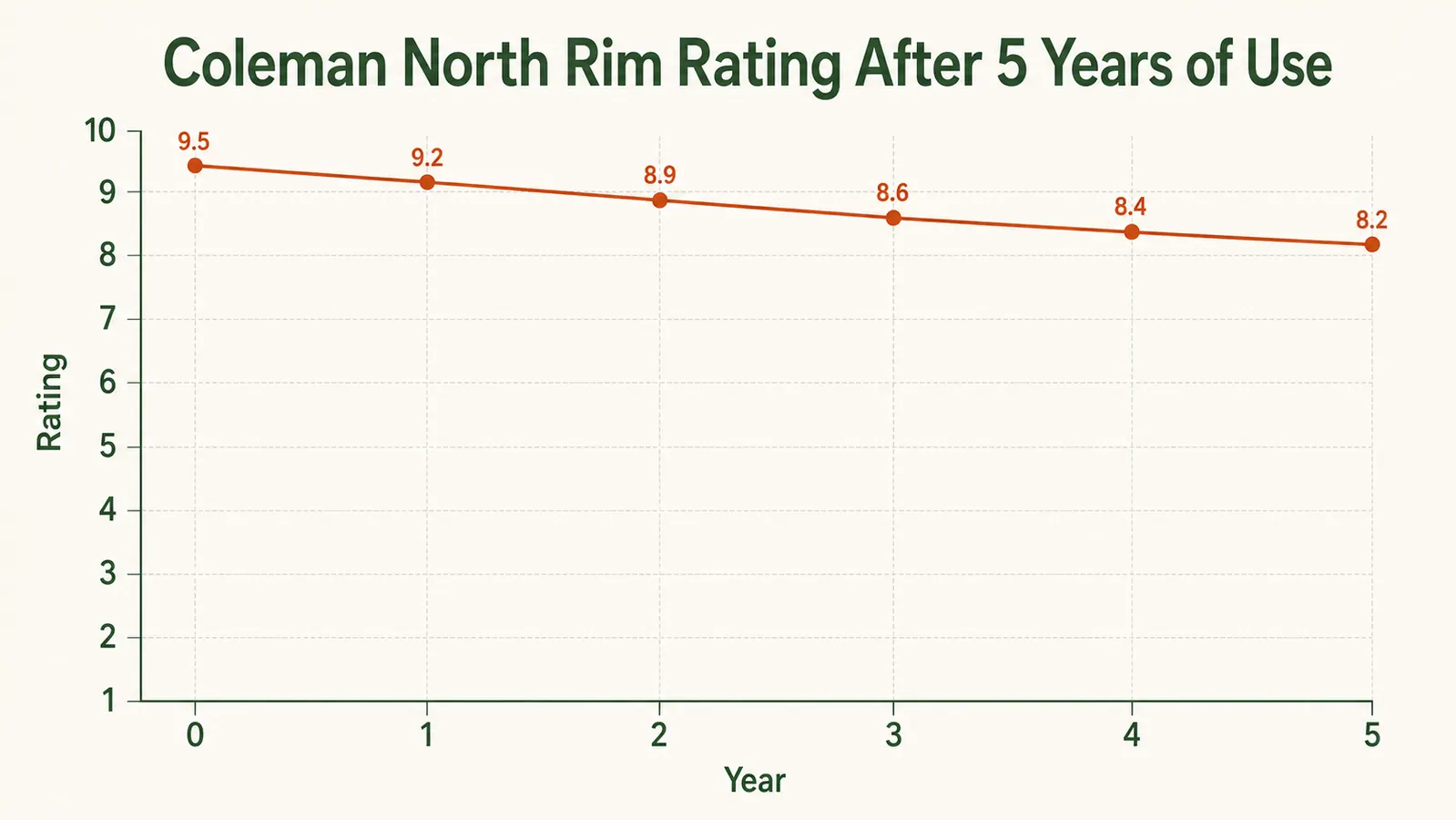
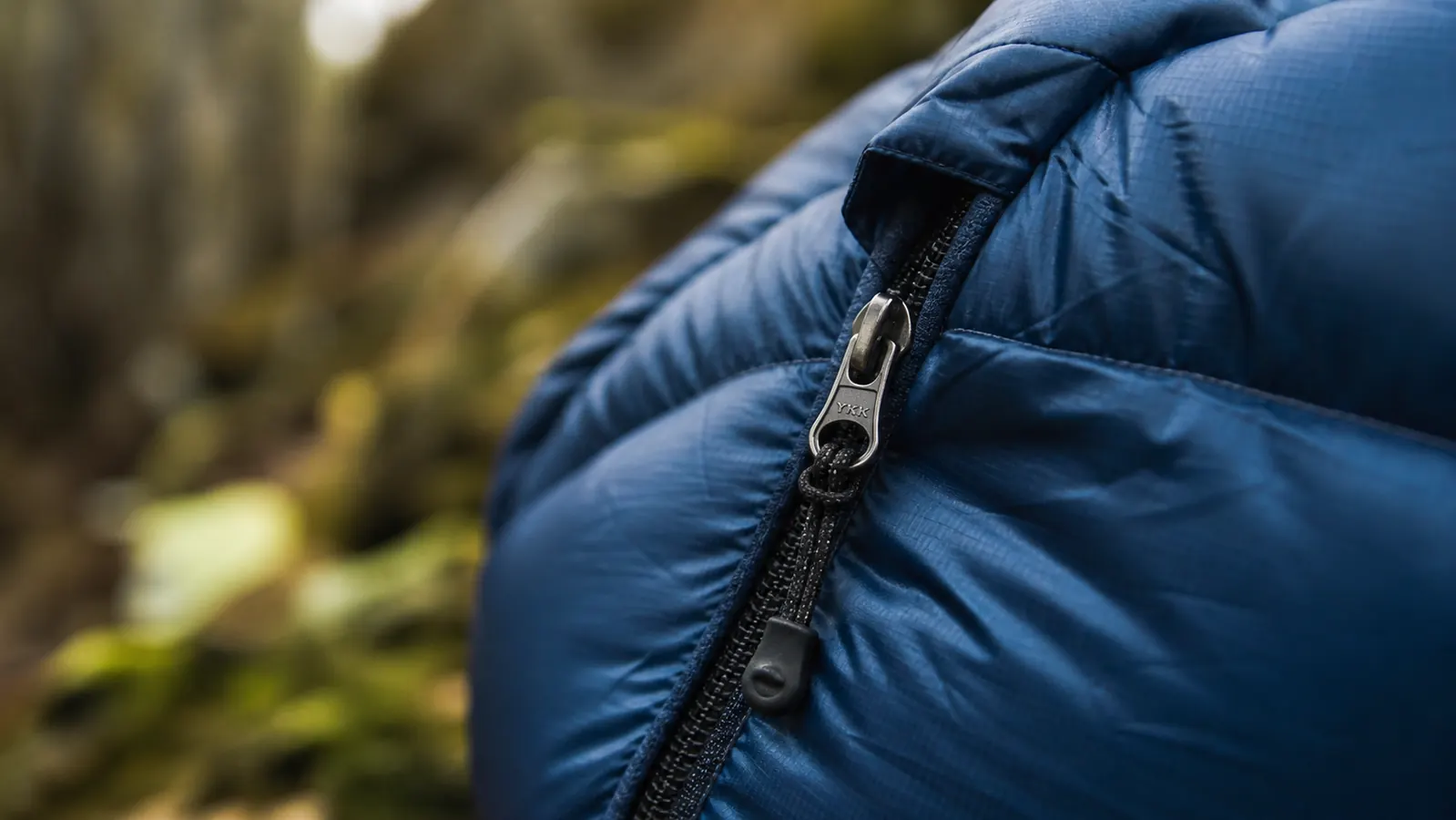
After three seasons and probably 35 to 40 nights in the bag, here is what has held up and what hasn't. The zipper still runs smooth, which matters more than it sounds. I've had bags where the zipper starts catching at the 18-month mark and becomes a cold-night frustration. The North Rim's full-length zipper runs from the foot box all the way up the left side and has a zipper draft tube backing it that hasn't compressed or separated. The exterior fabric shows light pilling in the foot area and along the zipper pull side, nothing that affects function.
The loft has decreased, which is expected with synthetic fill. A brand-new North Rim puffs up noticeably more than mine does now. I'd estimate I've lost maybe 10 to 15 percent of loft, which translates to slightly reduced warmth at the extreme end of the rating. My practical comfort floor has crept up from around 15 degrees to closer to 18 or 19 over three seasons. That's real degradation, but it's gradual and predictable, and you can compensate with a liner or by wearing a slightly warmer base layer. Down bags maintain loft better over time, but they cost two to three times as much and punish you the moment they get wet.
I've washed this bag six times in a front-loading machine on a gentle cycle with no detergent additives. Coleman's care instructions say to use a small amount of mild detergent and tumble dry low with tennis balls to break up any clumping in the fill. I've followed that method and the loft has recovered adequately each time. If you're borrowing gear or lending it out, wash it before you use it. That's just common sense, but the North Rim handles repeated laundering better than I expected for a bag in this price range.
What I Liked
- Genuine cold-weather performance down to approximately 15 to 18 degrees in practice for average sleepers
- Synthetic fill stays functional when wet, unlike down
- Mummy cut with a cinchable hood and draft collar does real work at sub-freezing temps
- Zipper has remained smooth and functional after three seasons and 35-plus nights
- Machine washable and recovers loft well after repeated washing
- Solid value for the price in the 0-degree mummy bag category
Where It Falls Short
- At roughly 5.5 pounds, it's too heavy for serious backpacking and long trail days
- Loft compresses noticeably over time, pushing the comfort floor up by 3 to 4 degrees after a couple of seasons
- Packs down to a medium-large stuff sack, not backpacking-grade compression volume
- Below 14 degrees requires a liner for average sleepers, so the stated 0-degree rating is not a comfort rating
- No compression sack included, the stuff sack is basic and adds bulk in a tight pack
Alternatives I Considered
Before I settled on the North Rim for cold-weather trips, I tried two other bags in a similar price range. One was a rectangular 20-degree bag from a house brand at a big-box sporting goods store. Warmer than a summer bag, not warm enough at 25 degrees, and the rectangular shape bled heat constantly through the gaps at the top. The second was a mummy bag from a brand I won't name here because they don't sell it anymore, and it failed its zipper at the six-month mark. The North Rim beat both of them without trying hard.
The most relevant comparison right now is the Teton Sports Celsius 0-degree bag, which I cover in a separate article. The short version: similar price range, slightly better loft retention over time, but the Teton runs about the same weight and the Celsius zipper has been less reliable across the group trips I've organized. The North Rim is still the bag I hand to friends who are trying cold-weather camping for the first time because it's predictable and it doesn't fail in interesting ways. For a full head-to-head breakdown, see my comparison of the Coleman North Rim vs Teton Celsius sleeping bag. And if you're still deciding whether a mummy cut is right for you at all, my piece on why a mummy sleeping bag beats a rectangular bag breaks down the shape argument in more detail.
Who This Is For
The Coleman North Rim is the right bag if you're a car-camper, a weekend trip leader, or a new-to-cold-weather camper who needs genuine 0-degree capability without spending premium prices on a down bag. If you camp from September through March at developed or semi-developed sites, do the occasional state park overnight where sleeping in the truck bed is part of the plan, or run group trips where reliable gear matters more than ultralight weight, this is a strong buy. It's also a practical choice for overlanding and base-camp setups where the heavy load rides in the vehicle and you're not carrying it on your back for ten miles.
Who Should Skip It
Skip the North Rim if you're a serious backpacker where pack weight is a real constraint, if you're planning trips where lows routinely hit single digits, or if you're a naturally warm sleeper who just needs something rated to 20 degrees at a lower price. The weight will frustrate you on long trail days. The loft degradation over time means the extreme-cold reliability shrinks with each season, so if you're buying this expecting it to hold its full 0-degree capability three or four years from now with no maintenance changes, that's not realistic. And if you camp in the desert Southwest where nights are cold but dry and you have the budget to justify spending more, a quality down bag in the 1.5-pound range at a 15-degree rating will outperform this on packability and long-term loft retention, with only the wet-weather durability as a tradeoff.
Three seasons in, the North Rim is still the bag I recommend to anyone serious about cold-weather camping without a premium gear budget.
Amazon currently carries the Coleman North Rim with Prime shipping available. It's worth checking the current price, especially if you're planning a fall or winter trip and need a reliable warm bag before the season hits.
Amazon Check Today's Price on Amazon →