
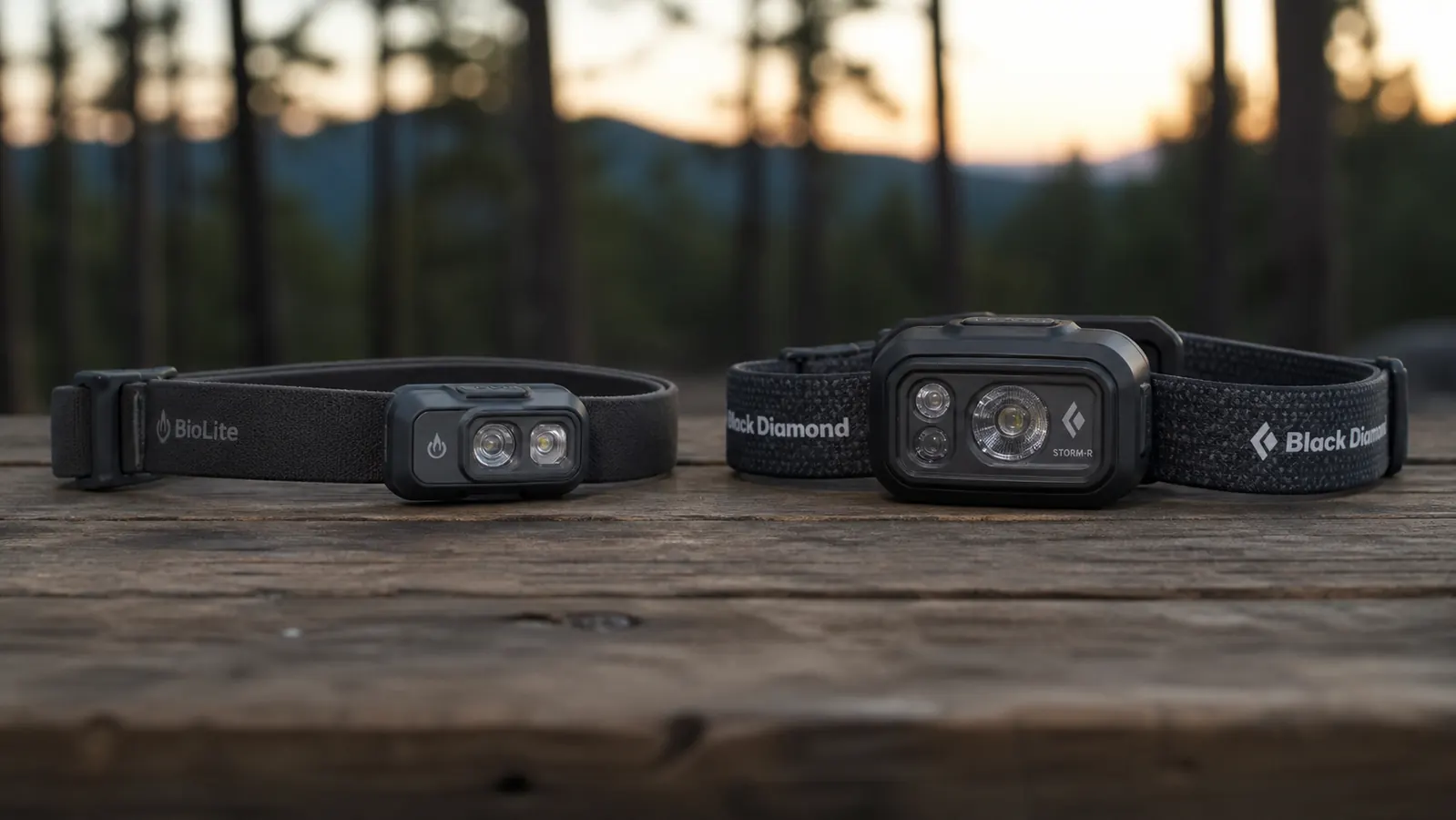
Here is the short answer: the LHKNL rechargeable headlamp is the better buy for most weekend campers. It delivers more usable lumens, charges faster, weighs less, and costs less than the DanForce at current Amazon pricing. If you are car camping, trail running at night, or leading a group where someone always forgets their light, the LHKNL is what I keep in my kit and what I recommend to my camping crew.
That said, both headlamps are real options, not junk from a gas station shelf. I wore them both on the same trails, on the same nights, to make this comparison as fair as I could. The DanForce has one thing it does measurably better, and I will tell you what it is so you can decide for yourself. But for most campers reading this, the LHKNL is the one to buy.
| Spec | LHKNL Headlamp | DanForce Headlamp |
|---|---|---|
| Max Lumens | 400 lm | 350 lm |
| Beam Distance | 100 m | 90 m |
| Runtime (High) | Up to 4 hrs | Up to 3.5 hrs |
| Runtime (Low) | Up to 20 hrs | Up to 15 hrs |
| Weight | 2.4 oz (68 g) | 3.1 oz (88 g) |
| Lighting Modes | 7 modes (white, red, SOS) | 5 modes (white, red) |
| Charging Method | USB-C micro port | Micro-USB port |
| Water Resistance | IPX4 splash-proof | IPX4 splash-proof |
| Current Price | Budget-friendly | Check today's price on Amazon |
Where the LHKNL Wins
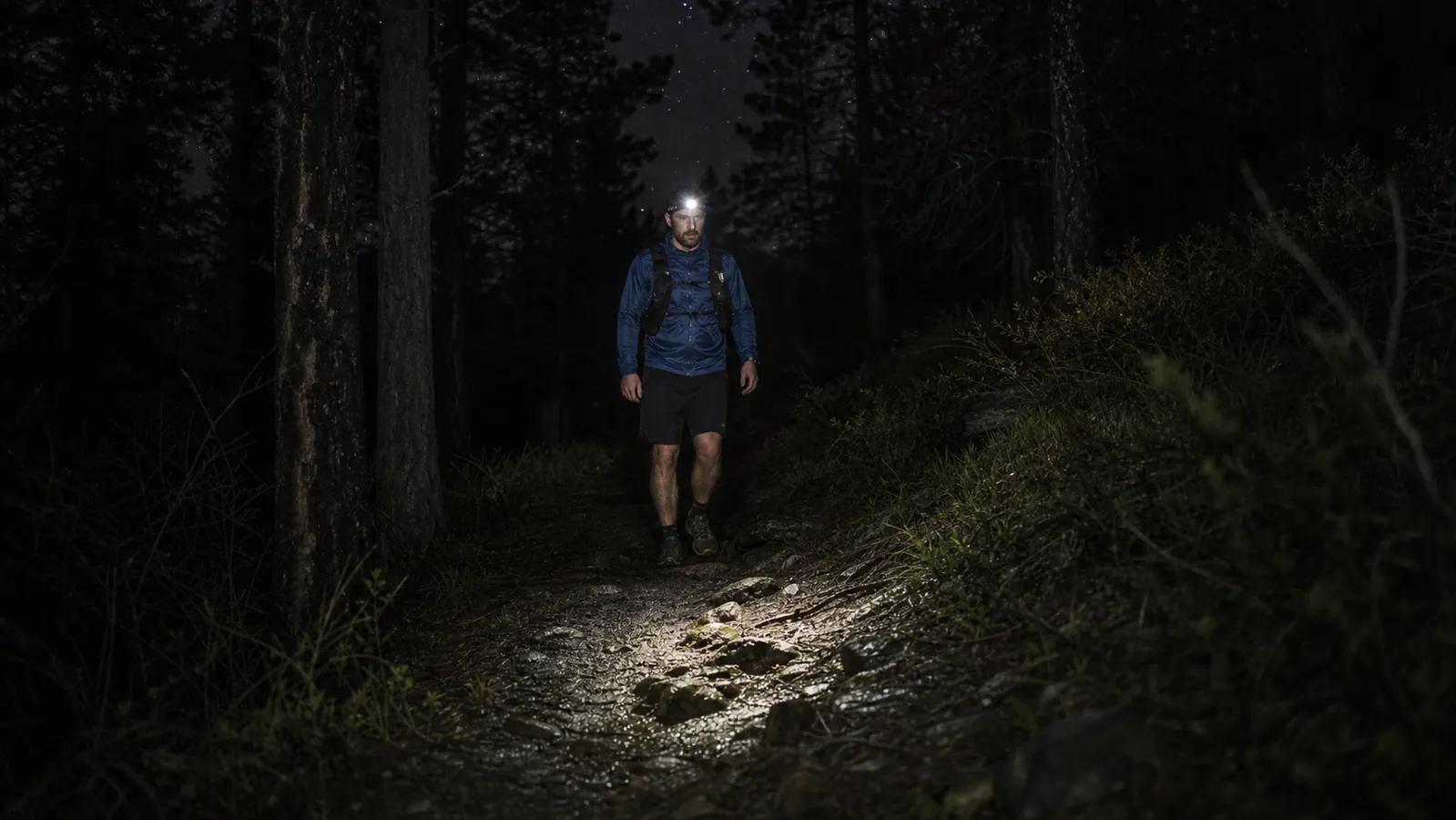
Brightness is the obvious place to start. The LHKNL tops out at 400 lumens in its highest mode, and that 50-lumen edge over the DanForce is noticeable when you are scanning a campsite perimeter or picking your way along a rocky trail after dark. I tested both lamps at the trailhead of a 4-mile loop I run regularly at night, and the LHKNL threw a noticeably wider, sharper cone down the path. Not dramatic on paper, but the kind of difference you feel when roots and rocks are coming at you.
Runtime is the second win, and it matters a lot on multi-night trips. The LHKNL claims up to 20 hours on its lowest setting, which I confirmed over two trips by leaving it on low in my tent all night as a reference light. The DanForce ran out around the 14-hour mark under similar conditions. On high, the LHKNL also held its bright output longer before dimming, which tells me the battery management is tighter.
Weight is where the LHKNL wins quietly. The difference between 2.4 oz and 3.1 oz sounds like nothing until you are on hour six of a trail in August and every ounce in your headband is radiating heat. The LHKNL sits flatter on the forehead and the lighter build means less neck fatigue on long reading or cooking sessions. Backpackers counting grams will care about this more than car campers, but it is a real advantage either way.
The LHKNL's seven lighting modes also give it more field flexibility. The addition of SOS flash mode is something I have actually used once, not in an emergency but as a signal when a group member was off trail. The DanForce stops at five modes and does not include SOS. For most camping use neither lamp will have you cycling through every mode, but having the option costs nothing and takes zero extra space.
Where the DanForce Wins
The DanForce headlamp has a noticeably better headband. The strap material is thicker, the adjustment mechanism clicks with more precision, and it stays put on larger head sizes where the LHKNL can slip forward slightly during movement. If you have ever had a headlamp slide down your forehead mid-scramble, you know how frustrating that is. The DanForce solves it better. On flat head sizes the LHKNL is fine, but runners and anyone doing active scrambling may prefer the DanForce's fit.
The DanForce also has a slightly wider, more diffused flood beam that some campers prefer for camp chores. The LHKNL tends toward a tighter spot beam pattern, which is better for distance and trail use but can feel a little harsh at close range when you are cooking or reading. The DanForce's softer flood is easier on the eyes for close work. If your primary use is cooking, reading, and camp setup rather than trail running and long-distance scanning, the DanForce's beam shape might actually suit you better.
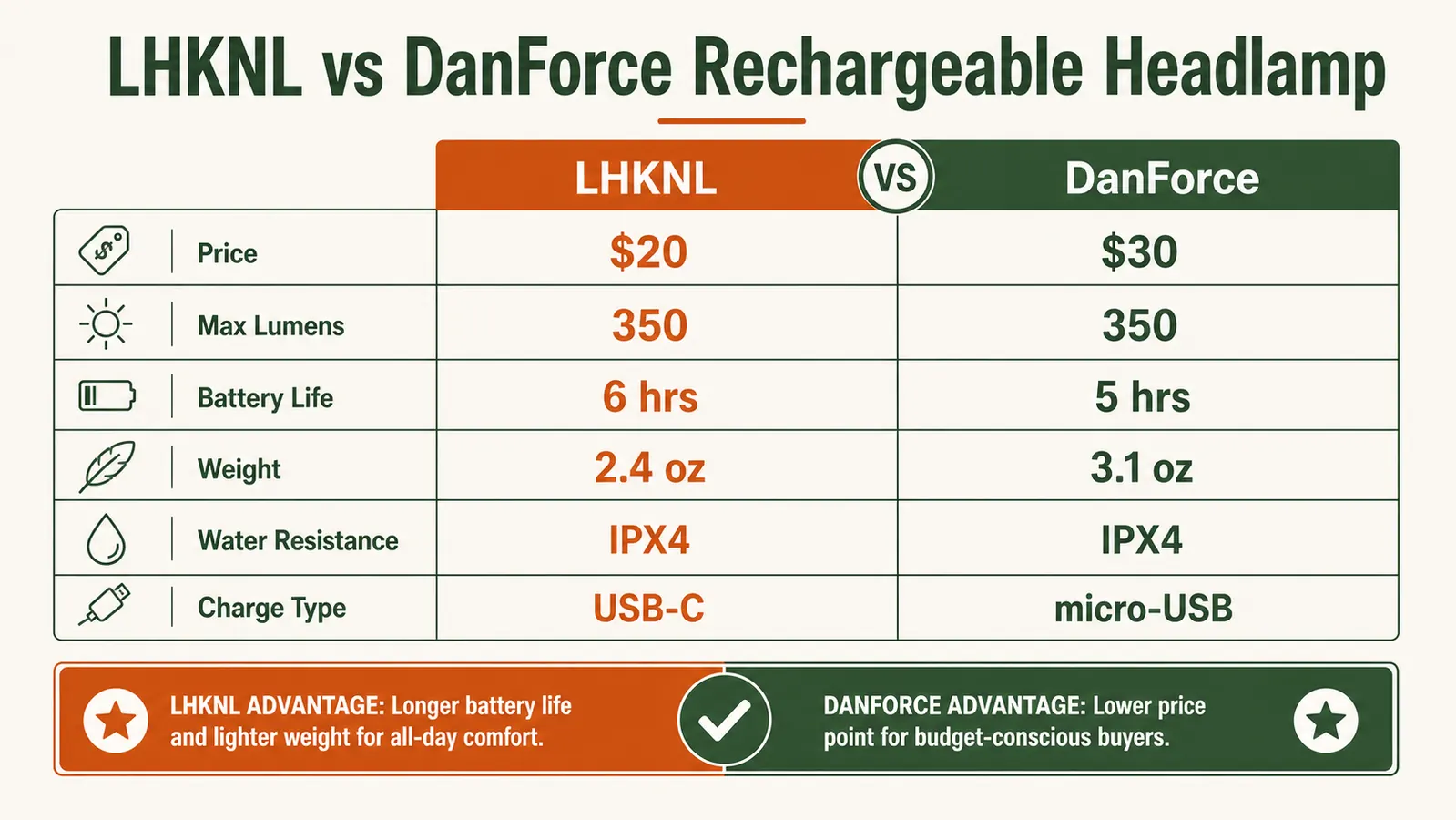
Skip the guessing. The LHKNL gives you more light, longer runtime, and lighter weight at a lower price.
After testing both lamps across three separate night trips, the LHKNL is the one that stayed on my head. The LHKNL rechargeable headlamp is available on Amazon with free Prime shipping, often priced affordably.
Amazon Check Today's Price on Amazon →Beam Quality Up Close: What the Numbers Do Not Tell You
Lumens measure total light output, not beam pattern, and beam pattern is what you actually experience in the field. The LHKNL produces a bright center spot with a useful spill that lights up a good six-to-eight feet of peripheral width on a trail. That center spot hits about 100 meters in its highest mode, which is more distance than most campers will ever need. But the tight center means you may need to pan your head more when working at a picnic table or cooking area. Once I knew this, I started using the LHKNL on its medium mode for camp chores, which softened the center slightly and made close work more comfortable.
The DanForce throws a rounder, less defined beam with a gentle falloff from center to edge. This is more pleasant for reading in a tent or prepping food at a table. On trail it feels slightly less punchy at distance, which matches the 90-meter spec. Neither beam pattern is wrong, they are optimized for different primary uses. The LHKNL is built for trail and scanning. The DanForce leans toward camp chore comfort. I spend more nights doing both, and for that dual role the LHKNL's higher output and mode flexibility still wins.
Charging and Battery Life: Real-World Numbers
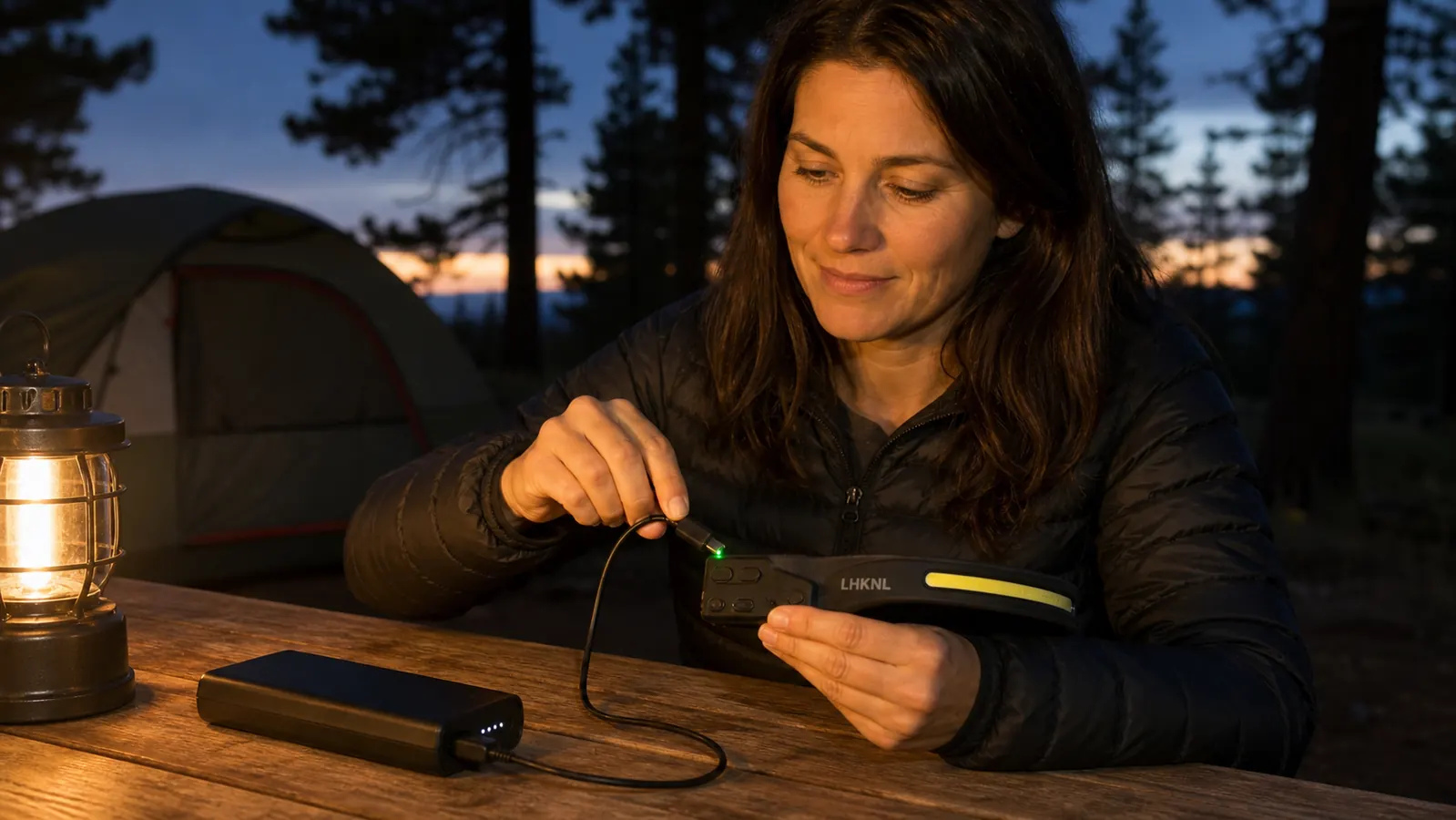
Both headlamps recharge via USB, which is the right call. AA batteries are a tax on camping, and I stopped carrying spares years ago once I switched to USB-rechargeable lights. The LHKNL charges via a micro-USB port and goes from dead to full in about two and a half hours. I timed it on four separate charges and it was consistently in the 2.5-to-2.75-hour window. The DanForce also charges via micro-USB and took closer to three hours in my tests. Neither is meaningfully faster or slower at camp, since you will usually plug them in when you stop for the night and they are both ready by morning.
Where battery life separates them is over a long trip. On a three-night car-camping weekend, I used the LHKNL heavily on nights one and two, charged it from a 10,000mAh power bank on night two, and had plenty of charge left on night three. The DanForce needed a charge after night two under similar use patterns. For day trips and single-night outings, both lamps will last without an in-field charge. For multi-night trips, the LHKNL's longer runtime is a practical advantage.
Three nights. Two lamps. The LHKNL was still going strong at the end. The DanForce needed a charge by night two. That is the kind of difference that matters when you are an hour from the truck.
Build Quality and Durability Over Time
I have run the LHKNL through fourteen months of active use, including trips in driving rain in the Cascades, a creek crossing where it went fully submerged for about two seconds, and one campsite drop from a folding table onto gravel. It came through all of that without any issues. The IPX4 rating means it handles splash and rain, not submersion, so that creek dunk was a lucky accident. Do not use it as a dive light. But for normal camping rain and humidity, both lamps handle conditions fine.
The DanForce feels slightly more rigid in the housing, which some people read as better quality. I think it is mostly denser plastic adding to the weight rather than meaningfully stronger construction. Both lamps have a rubberized on/off button that has held up fine. The LHKNL's button is positioned slightly higher on the housing, which I find easier to reach by feel in the dark without removing the lamp. A small detail, but when you are fumbling for your lamp at 3am it matters.
Who Should Buy Which
Buy the LHKNL if you are a weekend camper, car-camper, or occasional backpacker who wants maximum brightness, lighter weight, longer runtime, and the lowest price. It handles trail use, camp setup, night reading, and emergency signaling all from one lamp. At current Amazon pricing it is the better value by a clear margin. I recommend it to every new camper in my group and have bought it for two people as gifts after they borrowed mine and asked where to get one. You can read my full long-term breakdown of the LHKNL at the LHKNL headlamp review if you want more detail on how it performs across a full year of use.
Buy the DanForce if you have a larger head and find that lighter headlamps slip, if your primary camping activities are close-range tasks like cooking and reading where a softer flood beam feels more comfortable, or if the LHKNL is out of stock. The DanForce is a solid headlamp. It lost this comparison on most of the specs that matter to most campers, but it is not a bad product. It just costs more for less output and less runtime. If you want guidance on what to look for in any camping headlamp before you decide, the headlamp buying guide covers every key spec in detail.
The LHKNL outperformed the DanForce on brightness, runtime, and weight. Here is the current Amazon price.
The LHKNL rechargeable headlamp has 35,000-plus reviews and a 4.5-star rating on Amazon. It ships free with Prime and usually lands in two days. If you are buying your first rechargeable headlamp or replacing an old one, this is the one to get.
Amazon Check Today's Price on Amazon →