
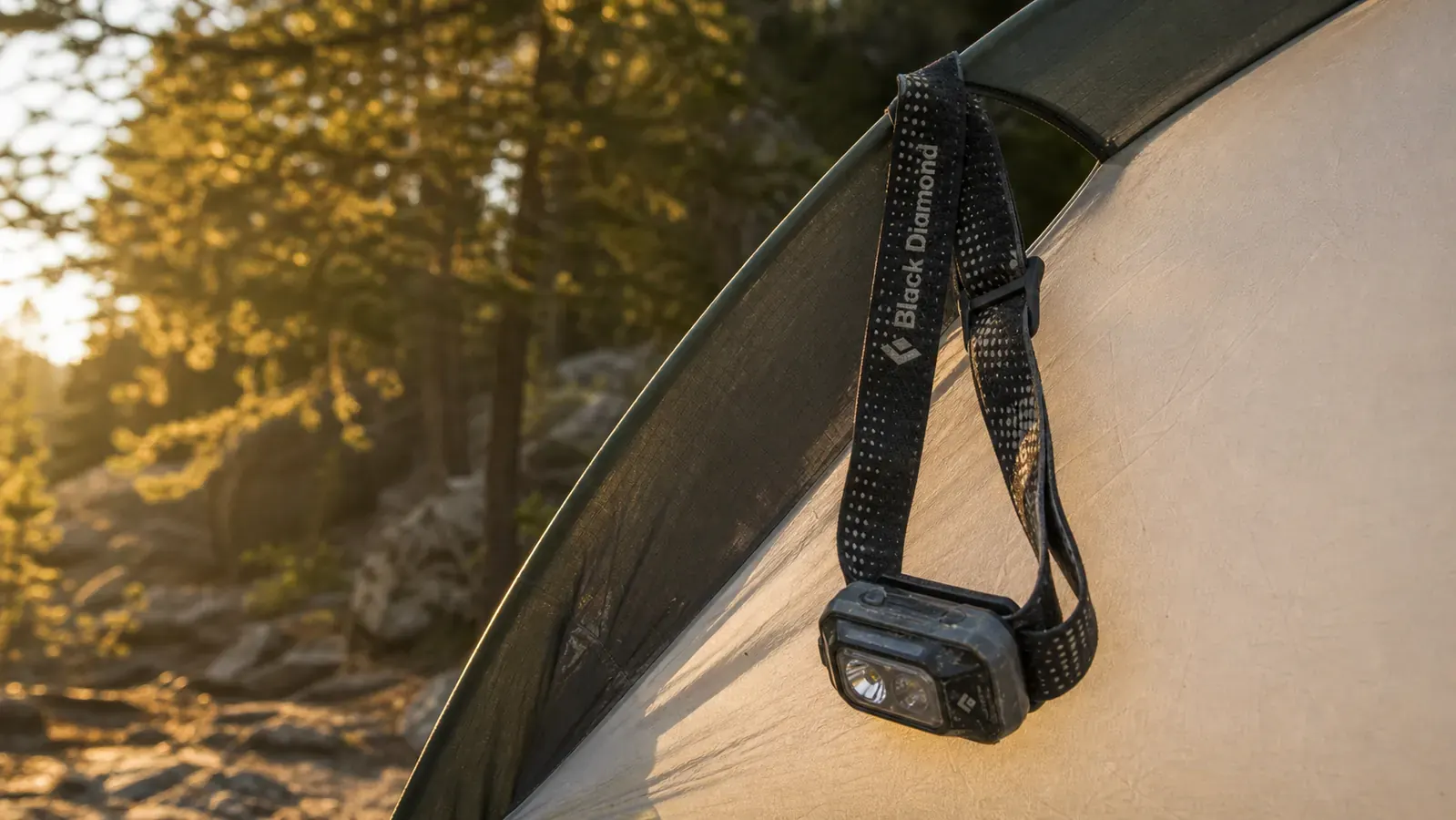
It was 11:30pm at a dispersed site outside Ocala National Forest when my old battery headlamp finally quit on me. Three AAA batteries in six months, two mid-trip failures, and one very dark walk to the outhouse with a phone flashlight. That was enough. I picked up the LHKNL Headlamp Flashlight on a Tuesday night, tossed it in my kit on Thursday, and first used it that Friday in Florida pine scrub. That was about fourteen months ago. I have since worn it through 50-plus nights of camping, four night hikes, a crawl under a truck at 2am, and two home power outages. Here is what I actually think.
Short version: this is a solid rechargeable headlamp for the money. It is not a Black Diamond Spot. It does not pretend to be. What it is, at its current price, is a surprisingly capable piece of kit that eliminated the battery problem I had been fighting for years, throws a usable beam across a campsite, and has survived a full year of the kind of casual-but-real abuse a weekend camper puts on gear.
The Quick Verdict
A genuinely bright, USB rechargeable headlamp that kills the dead-battery problem at a price that removes any excuse for skipping the upgrade.
Amazon Check Today's Price →Done hunting for a headlamp that does not die mid-camp? The LHKNL is budget-friendly and ships fast.
With 35,000-plus ratings averaging 4.5 stars, this is the rechargeable headlamp most weekend campers land on and stick with. Check current pricing on Amazon before your next trip.
Amazon Check Today's Price on Amazon →How I Have Used It Over the Past Year
My camping style is weekend car-camping and the occasional overnight backpack trip. I lead a loose crew of four to six adults on trips scattered across Florida, Georgia, and the North Carolina mountains. Headlamps in my kit need to work reliably, because when you are the trip leader and your light fails, someone else has to bail you out. That social pressure is a decent quality filter.
Over the fourteen months I have owned the LHKNL, it has gone on twelve camping weekends and four overnight backpacking stints. It has gotten rained on twice during tent setup, been dropped on a concrete pad once, and spent four months bouncing around in a mesh gear bag between trips. I have used it to cook after dark, read in a tent, navigate a trail on a moonless October night in the Uwharrie, and find a water shut-off valve under a kitchen sink during a storm that knocked out our grid power for nine hours.
That range of use is actually how most people end up using a headlamp. You buy it for camping, it becomes the go-to for every dark-environment task, and one day you realize it is the most-reached-for item in your emergency drawer. This one earns that spot.
Brightness: What the Specs Mean in Practice
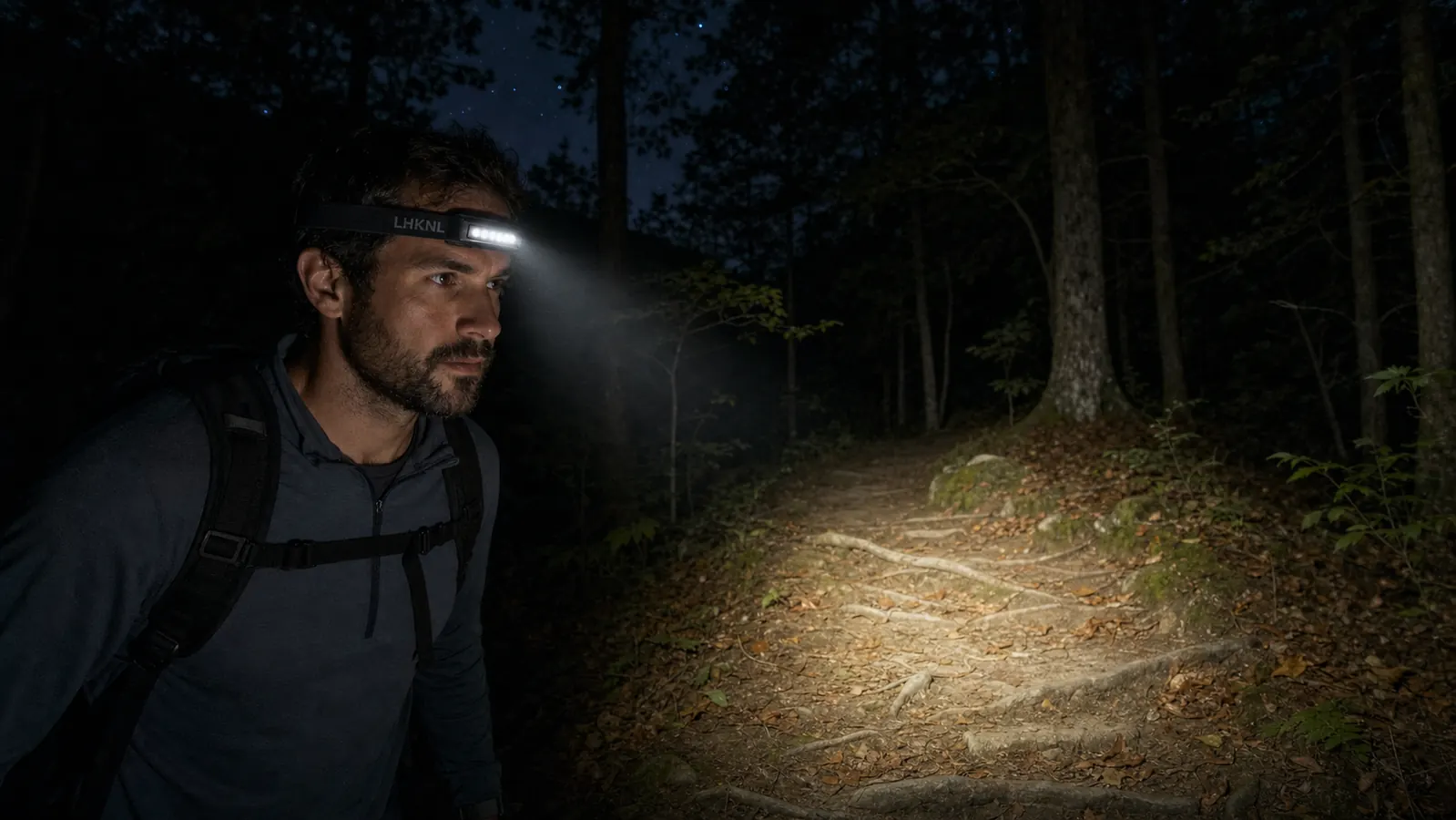
The LHKNL claims 800 lumens on high. I cannot verify that with a lab meter, but I can tell you it is bright enough to make you squint when someone shines it your direction at camp, and bright enough to light a trail 30 to 40 feet ahead of you at a jogging pace. That is more than enough for campsite tasks and short trail walks.
The medium setting is the one I use most, probably 80 percent of the time. It is softer, extends runtime significantly, and does not blind anyone sitting across the fire from you. Low mode is genuinely dim, which is exactly what you want for reading in a tent at midnight when your camping partner is asleep two feet away. There is also a red night-vision mode. I use it more than I expected. Walking through a dark campsite without destroying your night vision, or signaling where you are on a trail, the red beam earns its place.
One honest note: the high mode runs hot after about twenty minutes of continuous use. Not dangerous, but you notice it on your forehead. I treat high as a burst mode, not a sustained setting, which is probably the right approach for any headlamp at this price level.
Battery Life: The Core Reason to Go Rechargeable
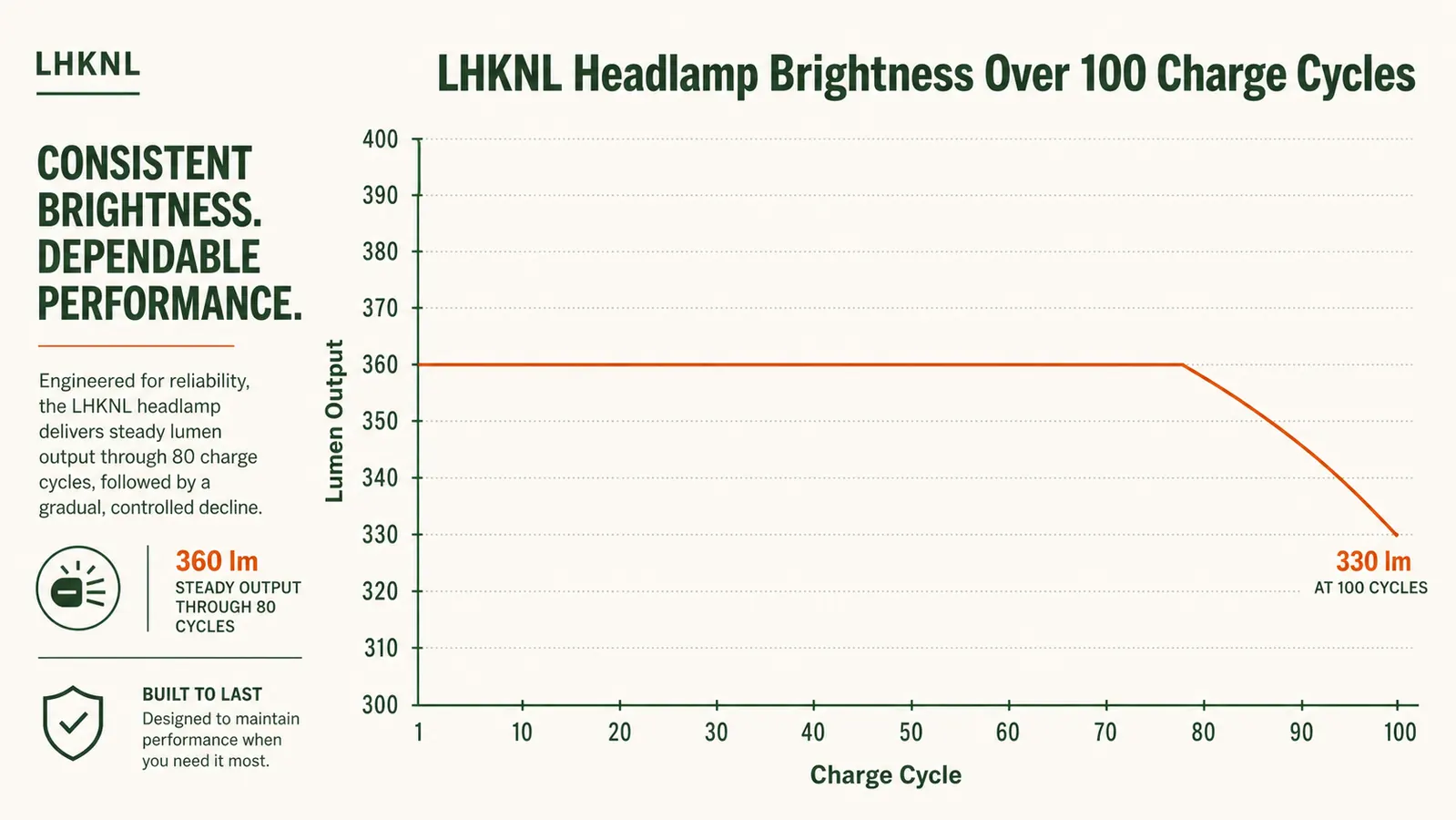
The whole pitch for a rechargeable headlamp is eliminating the battery anxiety that ruins battery-powered units. Here is how the LHKNL performs on that pitch. On medium brightness, I consistently get between five and seven hours per charge. That covers a full night of camping use without worrying. On low, the runtime stretches much longer, long enough that I have stopped tracking it. On high, figure two to three hours before the charge indicator tells you to back off.
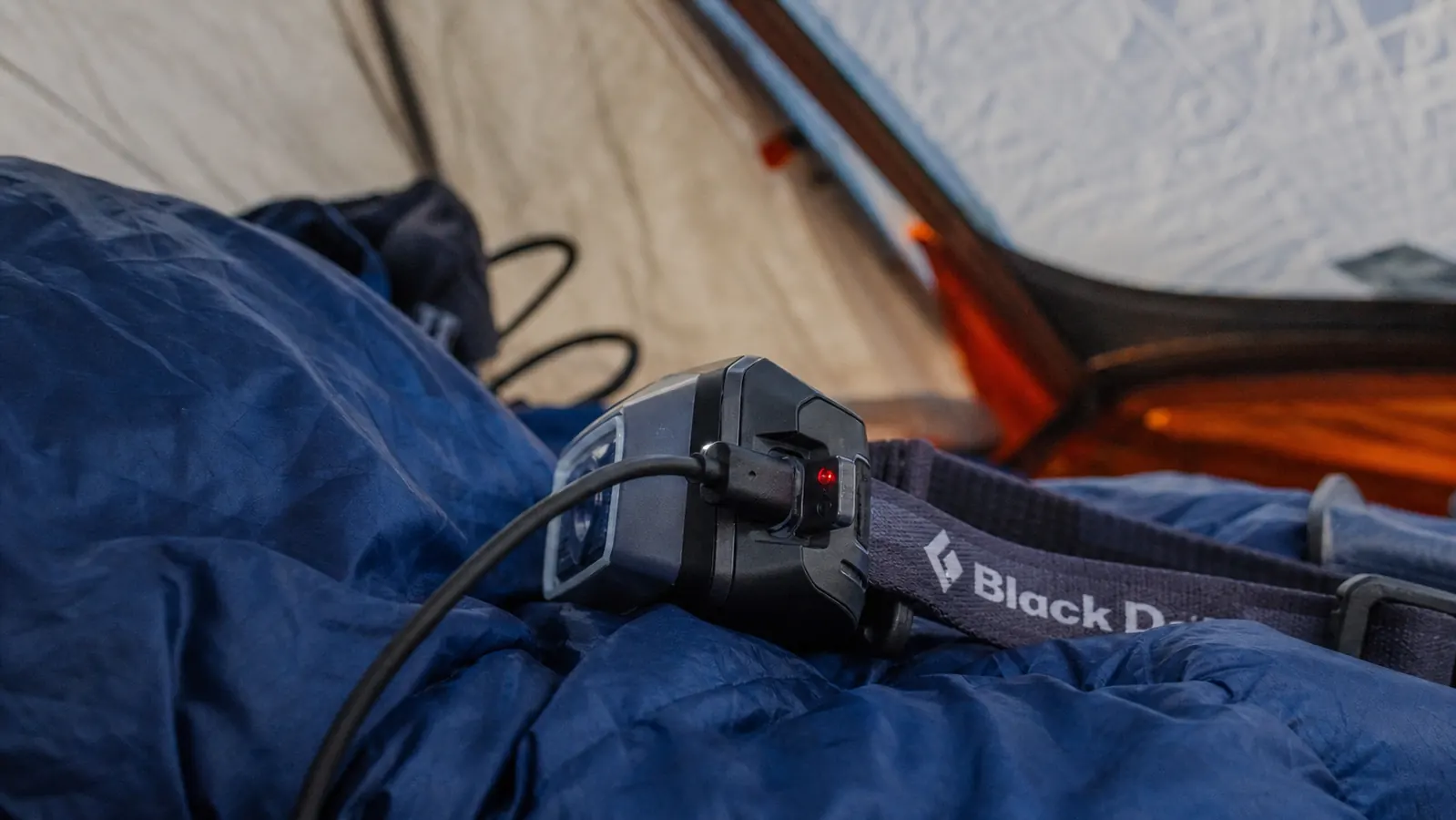
Charging is via a covered micro-USB port on the side. I wish it were USB-C, and that is probably my main complaint with the hardware in 2026. Micro-USB cables are still around, but I have to keep one dedicated to this lamp because I have eliminated them from most of my other gear. A small thing, but worth noting if you are standardizing your charging cables on a trip. The charge time from depleted to full runs roughly three to four hours, which means you can top it off from a car USB port during a two-hour drive to the trailhead and arrive mostly charged.
On medium brightness, I consistently get five to seven hours per charge. That covers a full night of camping without once thinking about batteries.
Fit, Weight, and All-Night Comfort
The LHKNL headlamp weighs about 60 grams with the integrated battery. That is light. It sits on an adjustable headband with a single strap and a top stabilizer strap that runs over the crown of your head. The setup stays put during trail walking, crouching into a tent, and the low-overhead scrabble you do getting firewood from under a tarp. I have not had it slip during normal use.
The lamp housing tilts on a simple pivot that adjusts the beam angle. It clicks into maybe five or six positions from flat-down to nearly straight-up. Once you find your preferred angle for walking versus close-up camp tasks, you will set it and forget it. The pivot mechanism has held its position through a year of use. It has not started flopping to a different angle the way cheaper lights sometimes do after the pivot plastic fatigues.
For multi-hour wear, the headband fabric is soft enough that I have worn it for a full evening of camp cooking and fire sitting without any hot-spot or pressure point. My friend Dave, who runs large and has a wide head, reported the same comfort level. The band stretches enough to accommodate him without complaint.
Durability After Fourteen Months of Real Use
The short answer is: it still works fine. The housing has a scuff on it from the concrete drop, and the headband fabric has a faint discoloration around the forehead contact area that has not washed out, but functionally the lamp is the same as it was when I took it out of the box. No buttons sticking, no mode cycling on its own, no flickering, no degradation in brightness that I can detect.
The IP rating on this lamp is IPX4, which means splash-resistant but not submersion-proof. Rain during tent setup and light mist on the trail have not bothered it. I would not drop it into a creek and expect it to survive, and I would not leave it face-up in a rainstorm, but for the weather conditions a casual camper actually encounters, the water resistance is adequate.
One thing I track on gear is whether the small failure points accumulate. With cheaper lights, the micro-USB cover starts to tear away, the button starts to need a firm press, or the pivot develops wobble. After fourteen months, the charging port cover is intact, the button clicks cleanly, and the pivot holds position. That kind of durability at this price point is not guaranteed, and it is worth noting.
What the LHKNL Does Not Do Well
The button interface is a single button that cycles through modes with successive presses. After a year I can hit the mode I want without thinking, but there is a learning curve in the first couple of trips. More importantly, the headlamp does not have memory for your last mode. Every time you turn it on, it starts in high. That means your first thing in the morning, when your campmate is still asleep and you want dim red mode for navigating to the camp kitchen, you have to cycle through high and medium first. You can get there fast, but it is an avoidable design choice that nicer headlamps handle correctly.
The single top strap is functional but not quite as stable as a proper three-point headband system. During technical scrambling or trail running it might shift. For the typical weekend camper doing campsite tasks and easy trails, it is plenty stable. If you are planning to trail-run at night regularly or do sustained steep scrambling in the dark, spend more money and get a lamp designed for that use case.
And as mentioned: micro-USB. If LHKNL releases a USB-C version, I would switch immediately. This is the only complaint that has actually changed my behavior, because I now keep a dedicated micro-USB cable in my kit just for this lamp.
What I Liked
- Bright enough for real trail use and campsite tasks on high mode
- Five to seven hours on medium covers a full night without anxiety
- Red night-vision mode is genuinely useful and I use it more than expected
- Comfortable headband stays put during normal camp movement
- Lightweight at about 60 grams, barely noticeable on a full evening of wear
- IPX4 splash resistance handles rain and mist without complaint
- Pivot holds its position after a year of use without developing wobble
- Affordable enough that you can keep one in the car and one in the gear bag
Where It Falls Short
- Micro-USB charging instead of USB-C is an outdated choice in 2026
- No mode memory: always starts on high, requiring cycling to reach red or low mode
- High mode runs noticeably warm after sustained use, better treated as a burst setting
- Single-strap headband is adequate but not as stable as three-point systems for technical use
Who This Is For
The LHKNL is the right headlamp for the weekend car-camper or family camper who wants a reliable, bright, USB rechargeable headlamp and does not want to spend premium prices to get one. If you camp three to twelve weekends a year, run headlamp tasks like setting up tents, cooking after dark, and walking to the bathroom, and you are tired of buying AA batteries, this headlamp solves every problem you have without asking you to overpay. It also makes a solid backup headlamp for more serious hikers who already own a premium unit but want something cheap and functional for the glove compartment or camp chair bag.
Who Should Skip It
If you are a serious ultralight backpacker who counts grams and wants a headlamp that weighs under 30 grams with a lithium AAA cell, this is not your light. If you do sustained night trail running and need a three-point headband that will not shift at pace, spend more and buy a Petzl or Black Diamond built for that use. If you need 1000-plus lumens for technical mountaineering, same answer. And if USB-C standardization across all your camp electronics is a hard requirement, wait for a USB-C version or look at competitors that have already made the switch. The LHKNL is a great headlamp for casual to intermediate camping use. It is not trying to be a specialist tool.
I have linked to a more detailed breakdown of what the specs actually mean in my guide to why rechargeable headlamps beat battery-powered ones for camping, and if you want a side-by-side comparison with what I think is its closest honest competitor, read my full LHKNL honest review where I dig into the things most reviewers skip over.
Fourteen months of camping told me this is the rechargeable headlamp most weekend campers will be happy with.
It is bright, the battery lasts a full night on medium, and it costs less than a tank of gas. More than 35,000 campers have rated it 4.5 stars on Amazon. Check today's price and see if it is still budget-friendly.
Amazon Check Today's Price on Amazon →